
The idea of earning crypto just by going for a walk sounds almost too good to be true – and if you search for the Step App in 2026, you will quickly discover that the reality is more complicated than the marketing suggests. Step App is a move-to-earn (M2E) platform built on the Avalanche blockchain that converts physical activity – walking, jogging, running – into FITFI and KCAL cryptocurrency tokens. It launched in 2022, signed Usain Bolt as its global brand ambassador, and attracted millions of downloads. By 2026, however, it faces a much harder conversation about what it actually delivers.
Key Takeaways
- Step App is a move-to-earn Web3 fitness app that rewards users with FITFI and KCAL tokens for walking, jogging, and running.
- To earn real rewards beyond the trial, users must purchase SNEAK NFT sneakers – there is an upfront cost involved.
- The FITFI token has dropped over 99% from its all-time high and was delisted from both Bybit and Bitget in 2025, raising genuine sustainability questions.
- The global move-to-earn market is growing, projected to reach $1.8 billion by 2030 (Grand View Research), but most individual tokens in the space have collapsed from peak values.
- Step App is best approached as a fitness tool with a crypto bonus – not as a primary income source. The financial risk is real.
The broader market behind apps like this is genuinely growing. According to Grand View Research, the global move-to-earn fitness apps market was valued at approximately $670 million in 2024 and is projected to reach $1.8 billion by 2030 at a compound annual growth rate of 17.7%. That growth reflects real demand: people want to be rewarded for staying active. Whether Step App is the right vehicle for that reward is what this review examines.
This article covers exactly how Step App works, what you actually need to spend to start earning, what the token situation looks like right now in 2026, the honest upsides and downsides based on real user experiences, and who this app is realistically right for.
What Is Step App and How Does the Move-to-Earn Model Work?
Step App – also styled as StepApp and developed by Step Labs – is a Web3 fitness application that uses GPS tracking and motion sensors to record physical activity and reward users with cryptocurrency. The core premise is simple: move in the real world, earn tokens in the digital one.
The app operates on the Avalanche blockchain, which uses a proof-of-stake consensus mechanism. It was developed by a team led by Kirill Volgin (CEO), Dmitry Gordeychuk (CTO), and Dharpan Randhawa (President). Development started in Q4 2021, and the FITFI token launched in Q2 2022. The project raised $2.75 million in its IDO on DAO Maker – at the time the largest IDO on that platform.
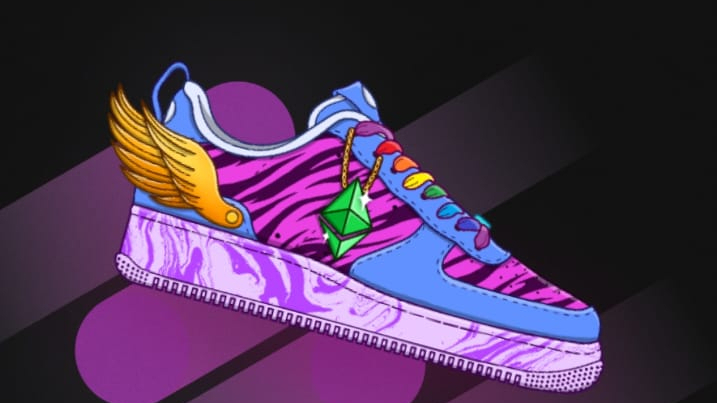
The model itself sits at the intersection of fitness gamification and blockchain. Unlike traditional fitness apps that track your steps for health data, Step App converts activity into a token economy. Users earn KCAL (the in-game token) during activity, and the ecosystem revolves around SNEAK NFTs – virtual sneakers that act as your earning tools. Without them, serious earning is not possible.
The Two-Token Economy: FITFI and KCAL
Step App uses a dual-token system that is essential to understand before you invest any time or money:
- FITFI is the governance and utility token of the Step Protocol. It has a maximum supply of 5 billion tokens. Holders can stake FITFI to access SNEAK and Avatar skins, earn royalty fee discounts, and receive up to 50% of NFT trading fees as staking rewards. It is also required as a fee for in-app activities like Clash competitions.
- KCAL is the in-game token. Users earn it by walking or running while their SNEAK NFT is staked. KCAL is used to purchase and mint new SNEAK NFTs, repair existing sneakers, and access marketplace deals. A 10-day staking cooldown applies before earned KCAL can be claimed, and exiting a stake early carries a 12% fee on the principal stake paid to the DAO treasury.
How to Get Started with Step App: The Real Requirements
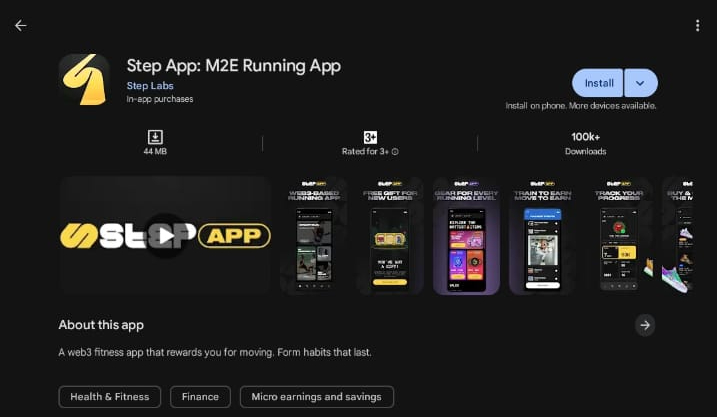
The app is free to download on both iOS and Android. New users receive a free Trial SNEAK that lets them test the activity tracking and reward interface for one week. However, there is a critical catch: KCAL earned during the trial period cannot be withdrawn and can only be used to repair your trial sneakers. This is a taste of the system, not a path to income.
To earn real, withdrawable rewards, you need to purchase a SNEAK NFT from the in-app marketplace. The workflow involves several steps that require existing crypto assets and some technical familiarity with Web3 wallets.
Step-by-Step: How to Actually Start Earning
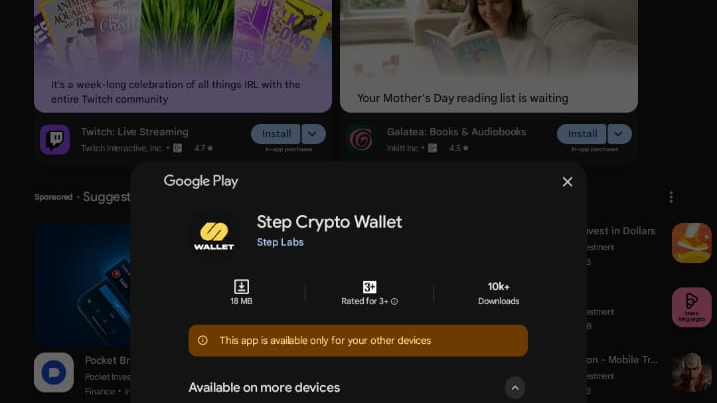
- Download Step App from the iOS App Store or Google Play Store.
- Register with your email address – the app sends a confirmation code to verify the account.
- Allow location tracking (required) – the app uses GPS to track your speed, count steps, and map your route.
- Use the trial SNEAK to explore the interface. Note that trial earnings cannot be withdrawn.
- To earn real rewards: acquire FITFI, KCAL, or USDT on an external exchange, transfer them to the Step Network, and purchase a SNEAK NFT in the marketplace.
- Equip your SNEAK (and optionally a HEADSET NFT for bonus earnings), then hit Start Run and go. The app tracks your activity using GPS and motion sensors.
- Earn KCAL based on your activity, SNEAK rarity, and level. Energy replenishes 100% every 24 hours, creating a natural daily earning cap.
One thing that catches beginners off guard: to access the Step Crypto Wallet (a separate companion app for managing in-app assets), it is currently not directly installable on all phone models and may require installation via Chromebook or another device. This friction is a real barrier for non-technical users.
All the Ways You Can Earn with Step App
Step App offers multiple earning paths beyond basic step rewards, which helps explain its appeal. Here is an honest breakdown:
| Earning Method | How It Works | Requirements |
|---|---|---|
| Move to Earn (Runs) | Walk, jog, or run with SNEAK NFT equipped. GPS and motion sensors track movement. Earn KCAL per activity session. | SNEAK NFT (paid). Location access. |
| Clash Competitions | Compete against other players for KCAL. Entry fee paid in ENERGY and FITFI. Four divisions based on SNEAK rank. | SNEAK NFT + FITFI tokens for entry fee. |
| Referral Program | Earn up to 20% of the KCAL earned on a referred friend’s runs passively, without extra activity. | Active account. Friend must be active runner. |
| FITFI Staking | Stake FITFI to earn up to 50% of NFT trading fees, access loot boxes, and unlock SNEAK skins and Avatar items. | FITFI tokens. 10-day cooldown to unstake. |
| NFT Marketplace | Buy and sell SNEAK NFTs. All transactions carry a 2.5% commission. Monthly limited edition NFT sales held regularly. | Marketplace account. FITFI or KCAL for purchases. |
| Gem Enhancements | Insert gems (Alexandrite, Ruby, Sapphire, Limonite) into SNEAK sockets unlocked at levels 15, 20, 25, 30. Boosts attributes. | Higher-level SNEAK NFT. Gems from marketplace or loot drops. |
| KCAL Utility Marketplace | Spend KCAL for discounts and deals with partner brands on wellness products and services. | Earned KCAL balance. Partner availability varies. |
The Step App Token Situation in 2026: What the Numbers Actually Show
This is where an honest review has to stop and look at the data without promotional framing. The FITFI token has had a brutal journey since its launch.
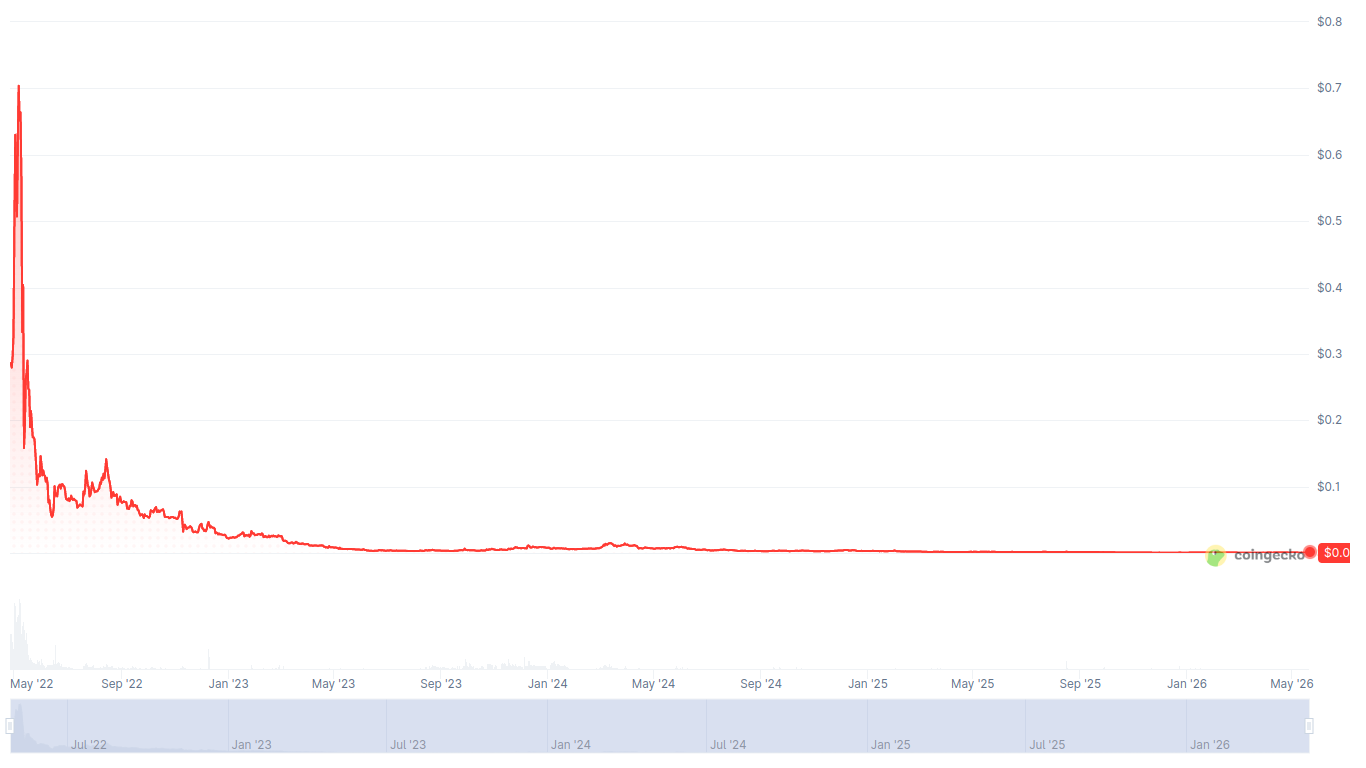
FITFI launched in Q2 2022 and reached an all-time high of approximately $0.73 on CoinGecko. As of mid-2025, it trades at roughly $0.0006 – a decline of over 99% from its peak. The market cap sits around $2.7 million (CoinGecko, CoinMarketCap live data), placing it at approximately rank 1,400-2,000 depending on the day. Circulating supply is approximately 4.5 billion FITFI out of a maximum of 5 billion.
Two significant events in 2025 underline the liquidity challenge. Bybit delisted the FITFI/USDT trading pair on April 14, 2025, citing declining trading volumes and shallow liquidity. Shortly after, Bitget delisted FITFI on May 24, 2025 as part of a batch removal of 27 trading pairs. These are not minor events – major exchange delistings significantly reduce the available exit liquidity for token holders and create real difficulties for anyone who needs to sell.
On the positive side, the Step App team has been active in marketing. A documented PR campaign was credited with driving a 138% increase in FITFI’s token value alongside generating a significant portion of site traffic (CoinMarketCap). A $10,000 trading competition was held in August 2025. The team has also launched Step 2.0 updates including Subscriptions and Avatars. However, the most recent detailed public roadmap dates to April 2023. No formal development timeline has been published for 2024, 2025, or 2026.
For anyone considering this as a financial opportunity, the token price trajectory matters more than the app experience. Price-driven earnings in move-to-earn apps tend to collapse when token prices fall – and FITFI’s fall has been extreme.
Read more: Sweatcoin Review 2026: Does Walking Really Pay or Is It a Waste of Time?
What Real Users Experience: The Good, the Frustrating, and the Unexpected
From user reviews across the Apple App Store (rated 3.2 out of 5 with 11 ratings at the time of writing) and community discussions, the picture that emerges is genuinely mixed.
The Positives Users Actually Report
Users who engage with the gamification side of Step App tend to enjoy it. The NFT sneaker system, the Clash competitions, and the leaderboard features create a genuinely engaging loop. One App Store reviewer described it as having “amazing rewards for each step” and being “very easy to use and helpful”, praising the features as well-built for daily use. The trial sneaker system is a smart onboarding move – it lets people understand the mechanics before committing money.
The AI Workouts feature (accessible within the app) provides fitness guidance that has value entirely independent of the crypto element, a useful addition for users who want structured movement plans. The referral system is also genuinely passive – once a friend is active, you earn a cut of their KCAL without additional effort.
For users who are already committed to daily running or walking, the app functions as a motivation layer that makes existing habits feel more rewarding. That value exists even if the KCAL rewards are modest.
The Problems Users Hit Quickly
The most repeated complaint in negative reviews is bugs. One App Store reviewer specifically mentioned a “moonwalking bug” introduced with a monthly challenge update that caused the app to stop recording steps entirely for two weeks. The reviewer noted that every update seemed to introduce a new bug, with users waiting for the next update to fix the previous one.
The wallet connection experience is a notable friction point. One iOS user found that the wallet import option was not appearing, with an “Update” button showing where “Refresh” should be, making it impossible to manage FAT tokens from MetaMask. The technical barrier of switching to the Step Network and managing multiple token types in a MetaMask wallet is genuinely challenging for crypto beginners.
The “cannot start run without required permissions” error is another common friction point seen in the app interface – even when location permissions are granted, some users face persistent blocks that prevent them from starting a session.
Beyond bugs, the economics raise questions. The trial SNEAK rewards cannot be withdrawn. The earned KCAL from a purchased SNEAK requires a 10-day cooldown before claiming. The Clash competition requires an upfront entry fee in both ENERGY and FITFI before any chance of winning KCAL. These mechanics mean the house always has a structural edge.
Check out also: StepN Crypto: The Move-to-Earn App That Pays You to Walk
Step App vs. STEPN: How They Compare
Step App is frequently compared to STEPN (GMT token), the most well-known move-to-earn platform. Both use NFT sneakers and a similar earn-by-moving model. Here is a direct comparison of the key differences:
| Feature | Step App (FITFI) | STEPN (GMT) |
|---|---|---|
| Blockchain | Avalanche (Step Network) | Solana and BNB Chain |
| Earning Token | KCAL (in-game); FITFI (governance) | GST (in-game); GMT (governance) |
| NFT Requirement | SNEAK NFT required for real earnings | Sneaker NFT required for real earnings |
| Trial Mode | Yes – free Trial SNEAK for 1 week (no withdrawal) | No free trial NFT |
| Celebrity Ambassador | Usain Bolt | None (community-driven) |
| Market Cap (mid-2025) | ~$2.7M (CoinGecko) | ~$114M+ (CoinGecko) |
| Exchange Listings | Reduced after Bybit and Bitget delistings in 2025 | Listed on major exchanges including Binance |
| Staking Rewards | Up to 50% of NFT trading fees to stakers | GMT staking available with platform fees |
The comparison is sobering for Step App. STEPN has a significantly larger market cap and more exchange liquidity. That said, STEPN’s token also fell massively from its peak – from over $4 to under $0.50 in the 2022-2023 collapse – so neither project has proven long-term token sustainability. The honest takeaway is that all move-to-earn tokens have faced serious value erosion when the initial hype phase ended.
Who Is Step App Actually Right For in 2026?
Given everything above, it is worth being direct about who this app makes sense for – and who it does not.
Step App makes most sense for people who are already active runners or walkers and want to add a crypto rewards layer to something they are doing anyway. If you go for a 30-minute jog every morning regardless, wearing a SNEAK NFT and earning KCAL is a low-friction way to accumulate tokens over time, with the understanding that those tokens may have limited value.
It also appeals to people genuinely interested in Web3 fitness gamification as a concept – the Clash competition, the sneaker upgrade mechanics, and the gem system create a genuine game loop. If you enjoy the RPG-style “build your character” experience and happen to do it by running outside, that is a real use case.
It is a poor fit for anyone primarily motivated by financial returns. The FITFI token’s 99%+ decline from its all-time high, the reduction in exchange liquidity, and the absence of a published development roadmap since 2023 make this a highly speculative financial instrument. Anyone buying SNEAK NFTs with the primary intention of making money should treat that money as money they are willing to lose.
It is also not beginner-friendly from a crypto perspective. Setting up MetaMask, switching to the Step Network, transferring FITFI, and navigating wallet connections across apps requires a baseline level of Web3 knowledge. Beginners can end up stuck at a technical step and unable to access earned rewards.
The Risks You Need to Know Before Downloading
Every move-to-earn review has an obligation to address risks directly, and this one is no different.
- Token price risk: FITFI has lost over 99% of its value from its all-time high. Past price behavior in this category of token is not reassuring. Your KCAL earnings are tied to a token with shallow liquidity.
- Exchange liquidity risk: Both Bybit and Bitget delisted FITFI in 2025. Fewer exchange listings mean it is harder to convert earned tokens to other currencies when you want to exit.
- NFT value risk: SNEAK NFTs have a purchase cost. If the platform loses users or the KCAL economy weakens, NFT resale prices fall and your initial investment may be worth less than you paid.
- Ecosystem sustainability: Move-to-earn systems depend on new users buying NFTs to sustain token prices. When new user growth slows – as it did for virtually every M2E app after 2022 – token prices tend to fall, which discourages further participation in a self-reinforcing cycle.
- Technical friction and bugs: Multiple users report persistent bugs, wallet import issues, and permission errors that block earnings. Technical instability is a recurring theme.
- No current public roadmap: The most recent formal development roadmap published by the Step App team covers 2023. Investors and users have limited visibility into what the platform plans to build next.
The Honest Verdict: Step App in 2026
Step App is a well-designed concept with real execution challenges and a genuinely difficult token market backdrop. The fitness gamification layer is creative and the app’s features – SNEAK NFTs, Clash competitions, gem enhancements, referral earnings, and the AI workout coach – are more sophisticated than most in this space.
But the financial picture is hard to ignore. FITFI trades at a fraction of a cent in 2026. Two major exchanges have removed the trading pair. No public roadmap has been issued in over two years. These are not small caveats – they are central facts for anyone considering putting money into this ecosystem.
The users who report the most satisfaction with Step App are those who treat it as a fitness motivation tool that happens to reward you in crypto, rather than a crypto investment that requires you to exercise. That mental framing changes the risk profile entirely. If the crypto value goes to zero and you ran 500 kilometers in the process, you still ran 500 kilometers.
If the move-to-earn sector interests you and you want to explore it in 2026, Step App is a real project with an active community, a trial mode that costs nothing to try, and a genuine fitness gamification experience. Just go in with your eyes open about what the tokens are currently worth – and what they were worth at their peak.
Frequently Asked Questions
The app is free to download on iOS and Android, and new users receive a free Trial SNEAK for one week. However, KCAL earned during the trial cannot be withdrawn. To earn real, withdrawable rewards, you need to purchase a SNEAK NFT using FITFI, KCAL, or USDT.
FITFI is the governance and utility token of the Step Protocol, built on the Avalanche blockchain. As of mid-2025, it can be traded on exchanges including Gate.io, KuCoin, MEXC, and OKX. Note that Bybit and Bitget both delisted FITFI in 2025, reducing the number of available trading venues. The live price can be tracked on CoinGecko or CoinMarketCap.
KCAL is the in-game token earned by running or walking with a staked SNEAK NFT. It can be used within the app to purchase and mint new SNEAKs or exchanged for other tokens. Converting KCAL to fiat currency requires selling it through the marketplace and then converting the proceeds via a supported exchange. The value of KCAL depends on market demand, which fluctuates.
Yes. To move beyond the trial and purchase NFTs or manage earned tokens, you need a Web3-compatible wallet such as MetaMask, configured to connect to the Step Network. This is a meaningful technical barrier for users new to crypto wallets.
This depends heavily on the FITFI and KCAL token prices, which change constantly. The amount of KCAL earned per session depends on your SNEAK’s rarity, attributes, and level, plus the gems equipped. With the FITFI token trading at a fraction of a cent in 2025 and reduced exchange liquidity, dollar-denominated earnings are very modest for most users. Treat any earnings as a bonus rather than planning a specific income target.
No. The Step financial app (step.com) is a US-based financial technology company offering a Visa debit card and banking features for teens and families. It has no connection to Step App (StepApp / FITFI), the Web3 move-to-earn fitness platform. They are entirely separate products from different companies.
The most recent detailed public roadmap from the Step App team was published in April 2023. No formal development timeline covering 2024, 2025, or 2026 has been publicly released. The team has been active in marketing and community engagement, including NFT sales and trading competitions, but a transparent technical roadmap has not been issued.
Step App is available to download in most regions on both iOS and Android. The app’s data safety disclosure confirms that no data is shared with third parties and that data is encrypted in transit. However, the ability to trade FITFI and KCAL tokens may be restricted depending on your country’s cryptocurrency regulations. Always check local rules before acquiring crypto assets.

Dan is a web3 copywriter who began his journey in 2019. With over five years of experience, he has built a solid understanding of the crypto space. His interests include DeFi, NFTs, GameFi, and emerging crypto projects. When he’s not writing, Dan enjoys reading and relaxing with a good film.