
Move to earn apps promise something that sounds almost too good: get paid in cryptocurrency just for walking, running, or cycling. The concept took off around 2022 when STEPN crypto reached peak hype and attracted millions of users to the idea. Today in 2026, the category has matured – but the fundamental tension between marketing claims and real-world payouts remains unresolved. The global fitness app market was valued at approximately $15.6 billion in 2025 according to data tracked by Statista, and move to earn sits at the intersection of that industry and crypto, making it a space worth examining carefully before you download anything.
Key Takeaways
- Most move to earn apps pay pennies per day – the fitness motivation is often more valuable than the crypto reward.
- Apps requiring an upfront NFT purchase (like STEPN) carry real financial risk and long ROI timelines averaging 250+ days.
- SWEAT Wallet is the easiest to start for free, but token value has collapsed and many users report the app stopped working reliably.
- Privacy and location data collection is a consistent concern across almost every app in this category.
- The most honest use case for move to earn apps in 2026 is as a fitness motivator – not a meaningful income source.
This guide covers the most prominent move to earn apps available in 2026: how they work, how much you actually earn, what the community says, and the real risks you should understand before committing time or money. The projects reviewed include STEPN, SWEAT Wallet, Walken, Genopets, Step App, and a few smaller alternatives. Whether you are a crypto enthusiast curious about the space or a fitness lover wondering if there is any extra upside to your daily walk, this breakdown will give you an honest picture.
What Are Move to Earn Apps and How Do They Work
Move to earn (M2E) apps are mobile applications that reward users with cryptocurrency tokens in exchange for physical activity – typically walking, running, or cycling. Most use the phone’s built-in pedometer, GPS, or integration with fitness trackers like Apple Health or Google Fit to verify movement. Some require purchasing a non-fungible token (NFT) – usually a virtual sneaker or character – before earning is unlocked. Others are free to start, offering smaller baseline rewards without any buy-in.
The reward token is usually the project’s own cryptocurrency. Users can then sell, stake, or use that token within the app’s ecosystem. The problem most of these projects share is a structural one: the money being paid out has to come from somewhere, and in most cases it comes primarily from new users purchasing NFTs or tokens. As one Reddit user put it bluntly: “There is no way to make big money from just people walking around, so these projects inherently will be Ponzi schemes or have tiny payments.” That is a fair summary of the core challenge facing the entire category.
The more sustainable models attempt to generate revenue through advertising, brand partnerships, DeFi staking fees, or selling anonymised fitness data to third parties – a point that raises legitimate privacy concerns discussed later in this article. Understanding these mechanics upfront helps you evaluate each app with realistic expectations.
Move to Earn Apps Compared at a Glance
| App | Free to Start | Blockchain | Token(s) | Activity Type | Estimated Daily Earnings |
|---|---|---|---|---|---|
| STEPN | No (NFT required) | Solana / BNB | GMT, GST | Walk / Run | $1-5 (entry level) |
| SWEAT Wallet | Yes | NEAR Protocol | SWEAT | Walk | $0.01-0.10/day |
| Walken | Partial (free tier) | Solana | WLKN | Walk / Game | Small (game-dependent) |
| Genopets | Partial (free pet) | Solana | GENE, KI | Walk / RPG | Very low (free tier) |
| Step App | No (NFT required) | Avalanche | FITFI, KCAL | Walk / Run | Varies by NFT tier |
| MoonFit | Yes | Moonbeam | MFT | Walk / Run / Swim | Beta – limited data |
STEPN (GMT and GST): The Pioneer That Defined the Category
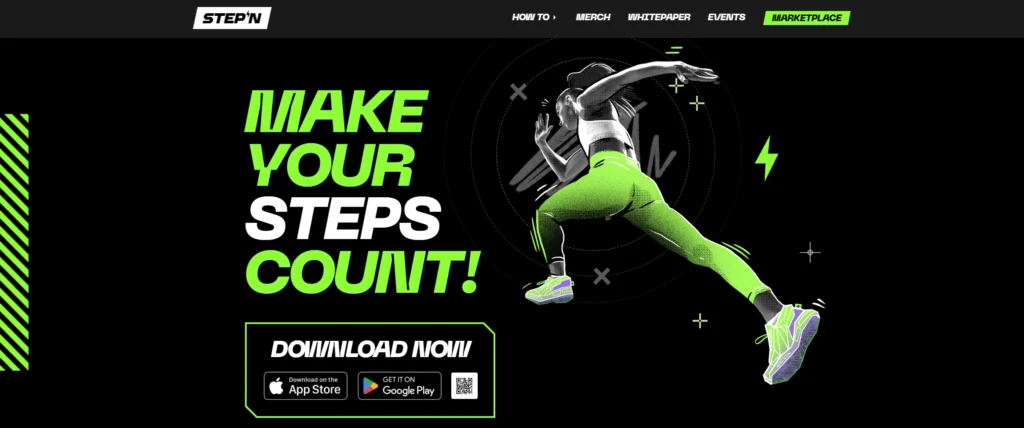
STEPN is the project most responsible for putting move to earn apps on the map. Built on the Solana blockchain and later expanded to BNB Chain, it launched in late 2021 and reached peak popularity in early 2022. Users earn Green Satoshi Token (GST) for everyday activity and GMT (Green Metaverse Token) for governance. The catch is the buy-in: you must purchase a virtual sneaker NFT to start earning, and entry-level sneakers have ranged from roughly $30 to several hundred dollars depending on market conditions.
How STEPN Earnings Actually Work
Earnings in STEPN are tied to the type and quality of your sneaker NFT, your energy allocation, and how many minutes you are actively moving. With a basic single sneaker, daily activity is capped at 10-20 minutes of earning time. Community members on Reddit have reported earning around $1-2 per day with three entry-level sneakers, while others with more investment have reported higher returns. One user described a 250-day average ROI timeline with a setup costing around $200 – a significant commitment before you break even.
STEPN charges a 6% marketplace fee (4% royalty + 2% transaction fee) on every NFT sale, which historically generated millions of dollars per day during peak activity. In 2025, the team launched STEPN Go as an evolution of the original app, sparking speculation about whether the first platform would be deprecated. As of 2026, both versions remain active.
What the Community Says About STEPN
Community sentiment around STEPN is genuinely mixed. Critical voices on Reddit accuse the project of banning users who ask uncomfortable questions in official Discord and subreddit channels – a behaviour widely seen as a red flag. Several users reported that as they earned, their principal (the NFT value) depreciated at a rate that effectively meant they were paying themselves back with their own investment. One commenter summarised it as: “as you earn your principal gets demolished and you end up just paying yourself.”
On the positive side, many users – including some who bought in near the all-time high – say the app genuinely changed their fitness habits. One longer-form Reddit post described planning daily runs around STEPN sessions, training for a first marathon, and finding the health benefits outweighed the financial underperformance: “The purpose is NOT TO MAKE MONEY. Being healthy is something I value way more than money.” That perspective is worth weighing carefully before you invest.
STEPN: Honest Verdict
STEPN is a real project with genuine utility for fitness motivation. However, the NFT buy-in requirement, long ROI timelines, token volatility, and history of rule changes that hurt smaller earners make it a poor choice for anyone hoping to generate meaningful income from walking. If you see it primarily as a fitness gamification tool with occasional crypto bonuses, it can work. Going in expecting a profit is where users consistently get hurt.
SWEAT Wallet: Free to Start, but Is It Worth Your Steps
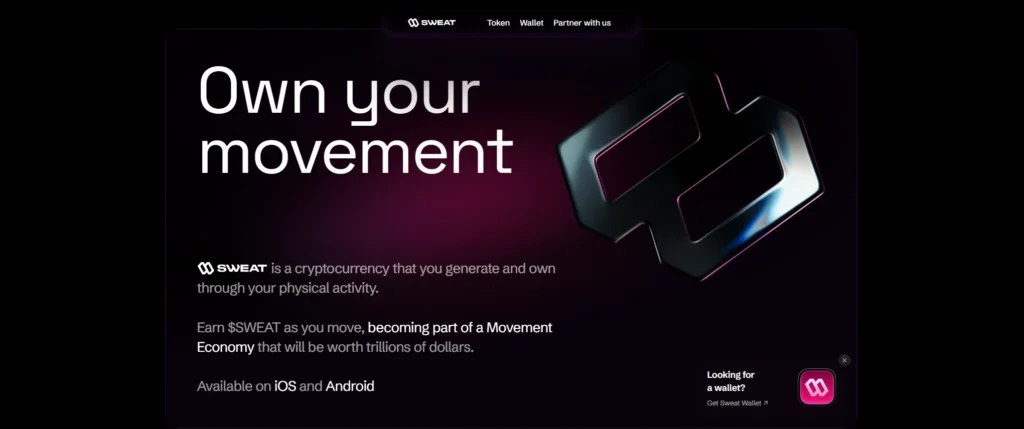
SWEAT Wallet is the crypto-integrated version of Sweatcoin, an app that has existed since 2016. The original Sweatcoin operated as a Web2 rewards platform – users earned in-app currency redeemable for discounts and products. In 2022, Sweat Economy launched the SWEAT token on the NEAR Protocol blockchain, allowing users to convert their earned sweatcoins into mintable crypto. The platform reportedly had over 65 million registered users at the time of its blockchain launch (self-reported by Sweat Economy), giving it by far the largest existing user base of any move to earn project.
How Much SWEAT Can You Actually Earn
This is where expectations need calibrating. Earnings are capped based on your subscription tier. The free tier caps at 5,000 steps per day, earning roughly 1.1 SWEAT tokens. At recent token prices, that equates to approximately $0.01 or less per day. One Reddit user who walks an above-average 14-16 km per day reported earning the equivalent of $3.17 USD over nine months. Another user calculated it took 112 days to earn approximately $1 worth of SWEAT. The premium subscription allows up to 10,000 steps daily but the proportional return does not change significantly.
The SWEAT token has experienced significant and ongoing price depreciation since launch. Multiple Reddit users describe it as “constantly depreciating” and warn against putting any real capital into it. There are also reports of gas fees on the NEAR network consuming a meaningful portion of small earnings when users try to convert or withdraw.
Sweatcoin and Data Privacy
SWEAT is notable for its advertising-based revenue model. The app functions partly as a branded rewards catalogue, which is how it funds some payouts. Several Reddit users describe it as an “advertisement app” or note that the app appears to derive value from monetising user fitness data and behaviour. The original Sweatcoin has acknowledged using advertising revenue. Whether that model can sustain improving token economics at scale remains unclear.
SWEAT Wallet: Honest Verdict
SWEAT Wallet is the lowest barrier entry point in the move to earn apps space – no NFT purchase required. However, the earnings are genuinely negligible for most users, the token has lost significant value since launch, and reliability issues (users reporting the app stopped tracking steps) undermine what little financial value it offers. The most honest use case is staking any existing SWEAT balance and waiting for a potential market recovery – not actively relying on it for income.
Walken: Steps-to-Gaming with Mixed Results
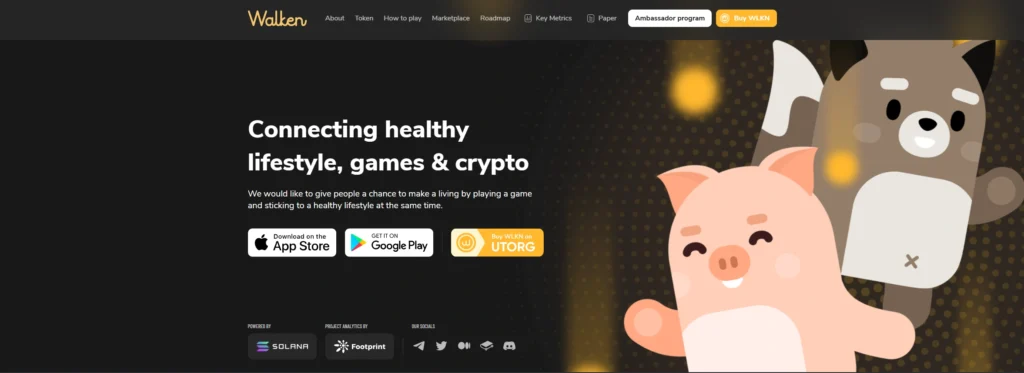
Walken operates on the Solana blockchain and takes a different approach: it converts your daily steps into in-game gems used to upgrade CAThletes (NFT characters) that battle each other. The WLKN token serves as the primary currency. You can earn small amounts without spending anything, but deeper progression requires purchasing CAThletes.
One Reddit user who gave it a 6/10 rating noted that the game mechanics are “not really funny and just requires some clicks.” They also managed to lose their seed phrase – a self-custody risk that applies to all blockchain-based apps. Another user reported earning about $30 in WLKN tokens over time without investing, converting them to XRP on Bybit. Walken has maintained a more loyal community than some competitors and continued developing its ecosystem through 2025. That said, earnings remain small and the game layer is unlikely to satisfy anyone looking for either meaningful crypto returns or a genuinely engaging gaming experience.
Genopets: Pokemon-Style Move to Earn on Solana
Genopets is described as the world’s first free-to-play move to earn NFT game and has been in development since late 2021. It combines step tracking with an RPG-style game where your steps power up a digital companion called a Genopet. The game uses two tokens: GENE (governance) and KI (utility). You can start for free with a basic pet, but real earning potential requires purchasing a Habitat NFT – which introduces a buy-in cost similar to other projects in this space.
Community feedback on Genopets is lukewarm. Users who tried it under a scholarship model (borrowing a character without buying one) report the game is functional but earnings were negligible and investor sell pressure consistently dragged token prices lower. One user who has been with the project since December 2021 acknowledged steady development progress. Another tried it for three days and moved on due to low engagement. The graphics have received praise, and the Pokemon-like concept has genuine appeal, but execution gaps and thin token economics remain barriers.
Step App: Gamified Fitness on Avalanche
Step App runs on the Avalanche blockchain and has one of the more feature-rich ecosystems in the move to earn apps category. Its components include a decentralised exchange (Step Ex), an NFT marketplace (Step Scan), a bridge, fitness quests, and competitive Clash Duels. Like STEPN, earning requires purchasing a Sneak NFT, after which you earn KCAL tokens for activity. The FITFI token handles governance.
Step App has attracted positive attention for its augmented reality features and the breadth of its fitness integration, but authenticity concerns have appeared repeatedly in community discussions. Questions about team transparency and the project’s long-term sustainability have not been fully resolved. As with all NFT-gated move to earn apps, the entry cost creates a real financial risk if token prices drop before you recover your investment.
Other Move to Earn Apps Worth Knowing About
MoonFit
MoonFit operates on the Moonbeam Network (a Polkadot parachain) and has been described by community members as one of the more serious long-term projects in the space. It covers walking, running, cycling, and swimming. As of late 2025 it was still in beta, which limits the amount of data available on real-world earnings. Users who have been daily participants describe a promising system but caution that the project is still maturing.
Coin Hunt World
Coin Hunt World is one of the most frequently recommended alternatives in Reddit discussions specifically because it has no buy-in requirement. Players walk around, find keycubes, and answer trivia questions to earn BTC and ETH – paid weekly. Multiple users report earning meaningful sums during its peak: one user reported making over $1,000 in 2022 walking about 50 minutes per day. The app has since undergone a significant redesign called Cubie Verse, with previous payouts paused during the transition. It remains worth monitoring for the relaunch.
W3Ride
W3Ride runs on Cardano and Polygon and focuses specifically on cycling, including compatibility with stationary bikes. It has a niche but dedicated community. Earnings data is limited, but its multi-chain design and sport-specific focus make it worth a look for cyclists who are already active in the Cardano ecosystem.
The Real Concerns With Move to Earn Apps You Should Understand
The Tokenomics Problem
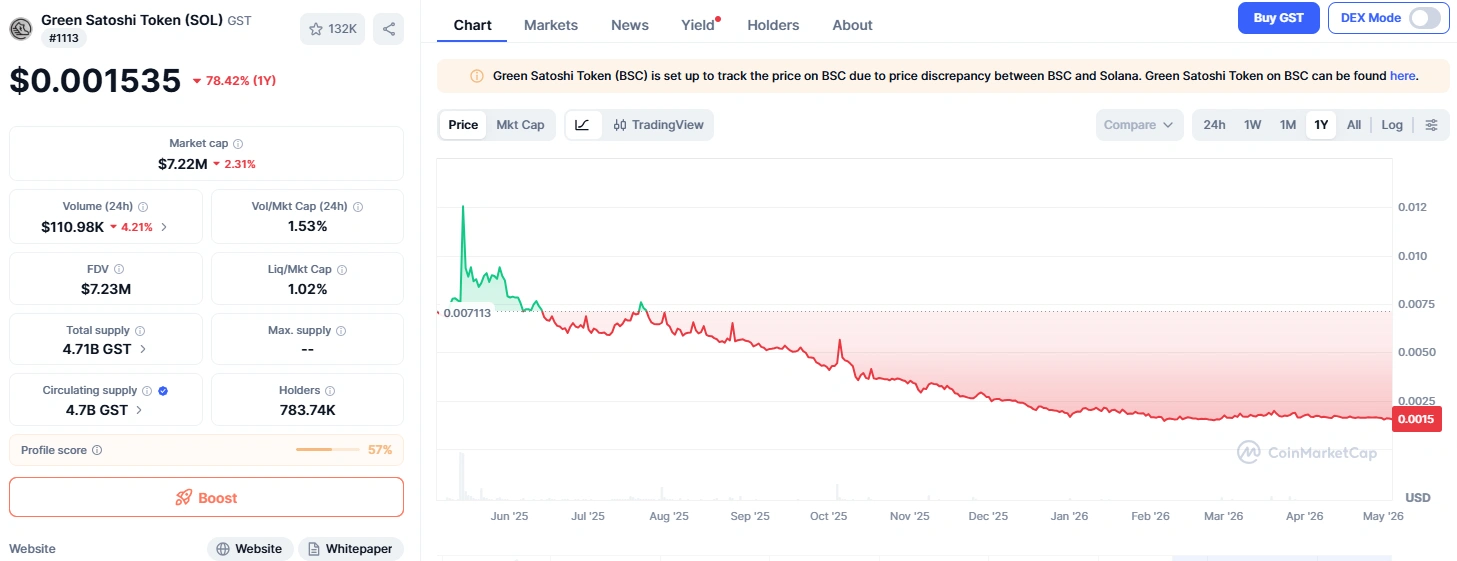
The core structural issue with most move to earn apps is straightforward: tokens are being created (minted) in response to user activity, but there is no external source of value purchasing those tokens at scale. New user buy-ins fund early user earnings. When user growth slows, sell pressure from existing earners overwhelms demand, and token prices collapse. This is the pattern that played out with STEPN’s GST token, which went from several dollars to fractions of a cent as growth peaked.
Some projects attempt to break this cycle through advertising revenue, DeFi fee capture, or brand partnerships. SWEAT’s advertising model is the clearest example. However, none have yet demonstrated that ad or partnership revenue alone can sustain meaningful per-user earnings at scale without a speculative premium on the token.
Privacy and Location Data
This concern surfaces consistently across Reddit discussions about every move to earn app covered in this article. When you use these apps, you are granting access to precise GPS location data, movement patterns, daily routines, and often health metrics. Multiple users raised the point directly: “they’re all pretty shit and generally just harvest your location data.” While apps like SWEAT state they do not sell user data and generate revenue through advertising instead, the business model of using location behaviour for ad targeting still means your data has commercial value that the company captures.
Anyone using move to earn apps should review the app’s privacy policy carefully and consider whether the token rewards – often worth less than a dollar per day – justify the data they are providing.
GPS Spoofing and Cheating
Because earnings depend on verified movement, GPS spoofing is a persistent issue. Bots that simulate walking routes, phone shakers, and location-spoofing software have been used to farm tokens in almost every major move to earn project. This erodes token value for legitimate users and creates ongoing challenges for developers trying to maintain earn integrity. Apps that lack robust anti-cheat systems tend to collapse faster as farming bots overwhelm supply.
Rule Changes and Platform Risk
Several users who stuck with STEPN for extended periods reported that the rules changed repeatedly, consistently making it harder for smaller accounts to earn. Energy allocations were adjusted, earning rates were reduced, and ban policies became more aggressive. This is a broader risk across all move to earn apps: the project is centralised enough that the team can alter the economics at any time, and smaller users typically bear the cost of those adjustments.
Who Should Actually Use Move to Earn Apps in 2026
Based on the evidence from community experience and how these apps perform in practice, the honest answer is that move to earn apps make the most sense for a specific type of user. If you already walk or run daily and are comfortable with crypto wallets, apps like SWEAT Wallet or MoonFit offer a low-friction way to accumulate a small token balance without spending anything. The earnings will be negligible in monetary terms but the gamification of step-counting can provide genuine motivational value.
If you are considering spending money on NFT sneakers with the expectation of generating a positive return, the historical track record across STEPN, Step App, and similar projects should give you serious pause. ROI timelines of six to twelve months or more, combined with token price volatility and the risk of rule changes, mean the financial case is weak. The fitness benefit is real; the income claim is not.
For total beginners to crypto, move to earn apps like SWEAT Wallet can serve as a low-stakes introduction to wallets, tokens, and DeFi concepts like staking – without requiring any initial investment. That onboarding value is real, even if the financial returns are not.
Frequently Asked Questions
Yes, but the amounts are typically very small. Free-to-start apps like SWEAT Wallet pay fractions of a cent per day for most users. Apps requiring NFT purchases like STEPN can pay $1-5 per day at entry level, but you first need to earn back the cost of the NFT before seeing a real return.
SWEAT Wallet has the lowest barrier to entry since it requires no upfront investment. You can download the app, connect your steps from your phone’s health app, and start accumulating SWEAT tokens for free. Just go in with realistic expectations about what those tokens are worth.
STEPN remains active in 2026 alongside its newer sibling STEPN Go. Whether it is “worth it” depends entirely on your goal. As a fitness motivator with a crypto bonus, it has worked well for many users. As a financial investment expecting a return, the track record since 2022 is poor for most participants who were not early entrants.
They carry several risks: token price volatility, project shutdowns, GPS data collection, and smart contract vulnerabilities. Apps requiring seed phrase management add self-custody risk. Always use a separate wallet for move to earn apps and only put in what you can afford to lose entirely.
Revenue models vary by project. STEPN charges marketplace fees on NFT transactions. SWEAT generates revenue through in-app advertising and brand partnerships. Others rely on new user NFT purchases to fund rewards. A few attempt to monetise anonymised fitness data. None has yet demonstrated a fully sustainable revenue model that does not depend in part on continued user growth.
Yes, particularly on apps that require upfront NFT purchases. If the token price drops significantly before you recover your investment – which has happened repeatedly across multiple projects – you will lose money. Even apps with no buy-in carry opportunity cost and privacy trade-offs that should be factored into the decision.
STEPN requires buying an NFT sneaker to start earning and operates on Solana. It offers higher potential earnings but significant financial risk. SWEAT Wallet is free to start, operates on NEAR Protocol, and earns a very small amount per day of walking with no investment required. STEPN is a financial commitment; SWEAT is closer to a background rewards app.
STEPN requires buying an NFT sneaker to start earning and operates on Solana. It offers higher potential earnings but significant financial risk. SWEAT Wallet is free to start, operates on NEAR Protocol, and earns a very small amount per day of walking with no investment required. STEPN is a financial commitment; SWEAT is closer to a background rewards app.

Stefan is enthusiastic about the new technologies, including blockchain. He got to know cryptocurrencies more than 15 years ago, when he mined his first cryptocurrencies on graphics cards. His latest goal is to spread new ways to use cryptocurrencies in the real world.