
Tap to earn games reward players with crypto tokens for simple actions like tapping a screen – no investment or technical knowledge required to start.
Key Takeaways
- Notcoin pioneered the model in 2024, attracting 35 million players and reaching a $1.1 billion market cap at peak.
- Most tap to earn crypto earnings are small and dependent on token listings that may never arrive, or arrive at far lower values.
- Scam risk is high. Several major projects – including TapSwap and X Empire – face credible accusations of wiped accounts, stolen identities, and frozen withdrawals.
- The honest approach: treat tap to earn as a free, low-effort way to explore crypto, not a reliable income strategy.
This guide covers how tap to earn crypto games work, reviews the five most prominent projects with honest assessments of their upsides and problems, explains the risks every player should understand before starting, and answers the question most people actually want answered: can you realistically make money. If you are looking for blockchain games with deeper mechanics our play to earn crypto games guide covers that separately.
What is Tap to Earn?
Tap to earn crypto games are exactly what they sound like: mobile games, mostly running inside Telegram, where players earn cryptocurrency by tapping the screen repeatedly. No upfront investment, no trading experience, no complicated wallet setup – just a smartphone and a few minutes of tapping per day. The concept exploded in 2024 when Notcoin attracted over 35 million players and proved that a simple clicker mechanic could drive genuine mass adoption of blockchain technology.
The blockchain gaming market reached an estimated $24.4 billion in 2025 with a projected CAGR of 62.6% through 2033 (CoinLaw, 2025), and tap to earn games have been a meaningful driver of that growth – particularly on The Open Network (TON) blockchain, where T2E games pushed daily trading volume from $2 million to $17.2 million within a single year (Crypto Daily, 2024). But alongside the genuine opportunity, the space has produced an unusually high number of failed promises, scam allegations, and tokens that never materialized.
How Tap to Earn Crypto Games Work
The mechanics of tap to earn games are deliberately simple. Players open a mini-app or bot inside Telegram, tap a coin, character, or object on screen, and accumulate in-game points or coins. Those points are later converted into a project’s native crypto token – either through a token launch, an airdrop, or an ongoing conversion system.
Most tap to earn games run on The Open Network (TON) blockchain, which integrates natively with Telegram’s infrastructure. This gives developers instant access to Telegram’s massive user base – over 900 million monthly active users – and allows for wallet integration without requiring players to set up external tools. Players can start tapping without ever touching a crypto wallet in the early stages; the wallet connection comes later when tokens are ready to claim.
The core earning loop across most T2E games involves four layers:
- Tapping. The primary action. Every tap generates in-game coins. Most games include an energy or stamina system that limits how many taps you can perform per session, preventing 24-hour grinding.
- Boosters and upgrades. Players can increase their earnings per tap by unlocking upgrades – sometimes free, sometimes purchasable. This is where games begin to blur the line between free-to-play and pay-to-win.
- Passive income mechanics. Many games add a profit-per-hour system that continues earning while you are offline, encouraging daily check-ins rather than marathon tapping sessions.
- Referral programs. Almost every T2E game rewards players for inviting others, creating viral growth loops that drive the enormous user numbers these games report.
When and How Players Get Paid
This is the part most promotional content glosses over. In the majority of tap to earn crypto games, players do not earn real crypto while tapping – they earn in-game points that may eventually convert to real tokens. Whether those tokens arrive, and at what value, depends entirely on the project’s token launch – an event that can be delayed, reduced, or cancelled entirely. Players who grind for months before a token launch frequently discover their payout is worth far less than the time invested.
A Chainplay survey of 957 T2E players found that 50.6% reduced their activity after their first airdrop, and 17.8% quit immediately after – clear evidence that the earnings rarely match the expectation (BeInCrypto, 2024). Over 51% cited repetitive gameplay as their primary reason for leaving.
The Five Most Prominent Tap to Earn Crypto Games Reviewed
| Game | Blockchain | Peak Users | Token | Current Status |
| Notcoin | TON | 35M+ | $NOT | Token live; -90%+ from peak price |
| Hamster Kombat | TON | 300M+ | $HMSTR | Season 2 complete; token volatile; ~10M active users (2025) |
| TapSwap | BNB Chain | 72M+ | $TAPS | Token launched Feb 2025; fraud allegations persist |
| X Empire | TON | 50M+ | $X | Token launched; serious fraud accusations |
| Catizen | TON | 49M peak | $CATI | Live; ~1M monthly active users mid-2025; Animoca-backed |
Notcoin (NOT)
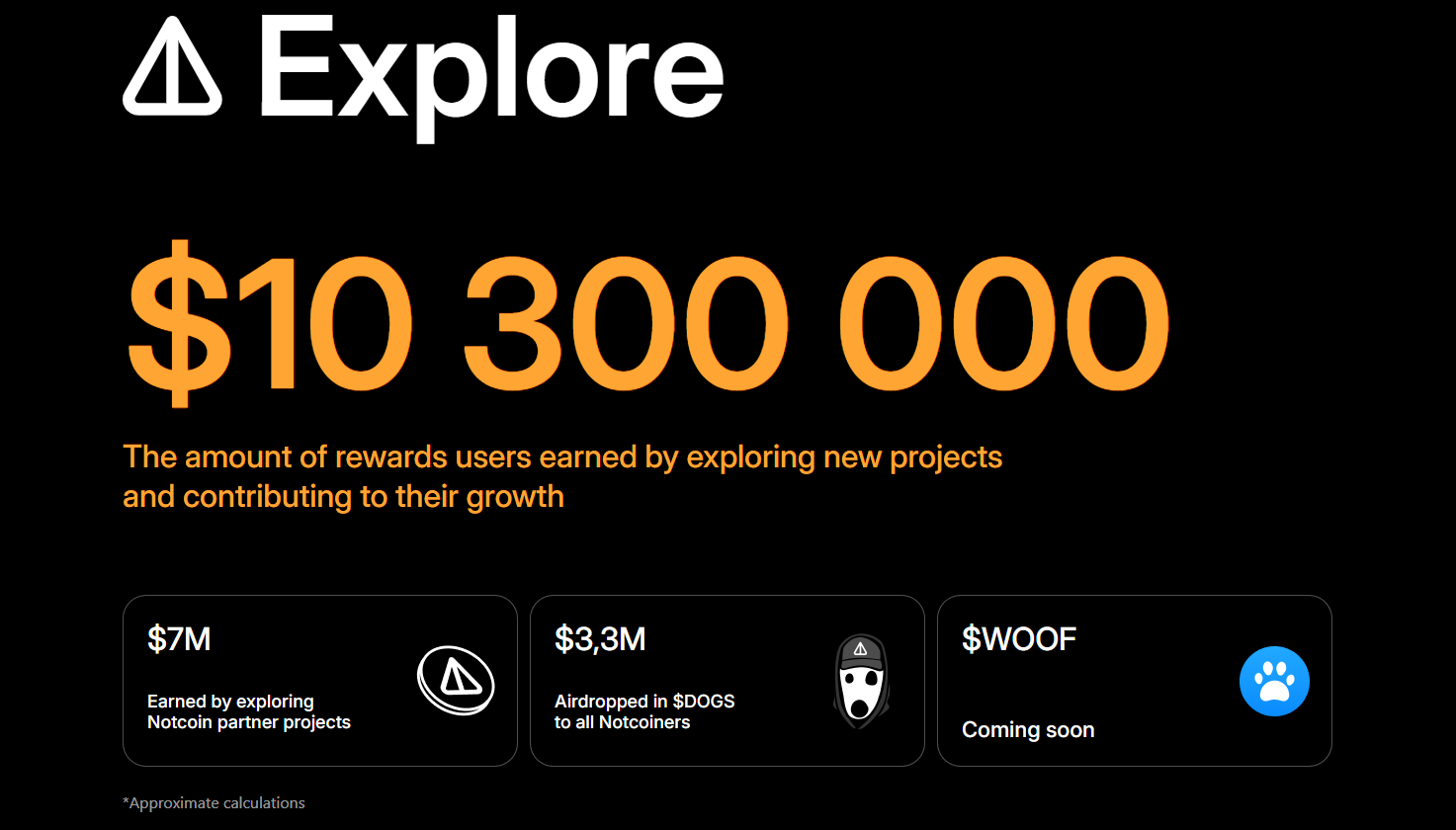
Notcoin is the game that defined the tap to earn category. Launched in closed beta on Telegram in November 2023 and fully released on January 1, 2024, it attracted over 5 million players in its first week alone – eventually reaching 35 million total players. Built on the TON blockchain by the Open Builders community with TON Foundation support, Notcoin’s mechanics were stripped-down by design: tap an animated coin, accumulate points, convert them to $NOT tokens.
The $NOT token launched on Binance, OKX, and Bybit on May 16, 2024. At peak it reached a market cap of approximately $1.1 billion, briefly ranking as a top-100 cryptocurrency. Over 80 billion tokens were distributed to 35 million players (Changelly, 2025). As of April 2026, the token trades at approximately $0.0006 with a market cap around $60-70 million – a decline of over 90% from its peak.
What Notcoin Did Right
- Zero barriers. No wallet required to start. No investment. No technical knowledge. This made it the most accessible Web3 onboarding tool of its era.
- Real token listings. Notcoin actually delivered – tokens launched on major exchanges, players received real assets they could sell.
- Clean game loop. Simple, addictive mechanics with an active community and leaderboard competition.
- TON ecosystem pioneer. Notcoin’s success triggered a wave of TON-based development and drove blockchain adoption at a scale no other game had achieved.
What Has Changed
- Earnings for new players are minimal. The tapping rewards have shrunk significantly as the economy matured. Late entrants captured very little value.
- Token price decline. Players who held $NOT hoping for further appreciation have seen it lose over 90% of its peak value. Those who sold at launch fared best.
- No second major airdrop confirmed. As of early 2026, the Notcoin team has not announced a second main airdrop campaign.
Notcoin remains the benchmark case study for tap to earn crypto – proof that the model can work, but also that timing matters enormously. Early players won. Late arrivals gained very little.
Hamster Kombat (HMSTR)
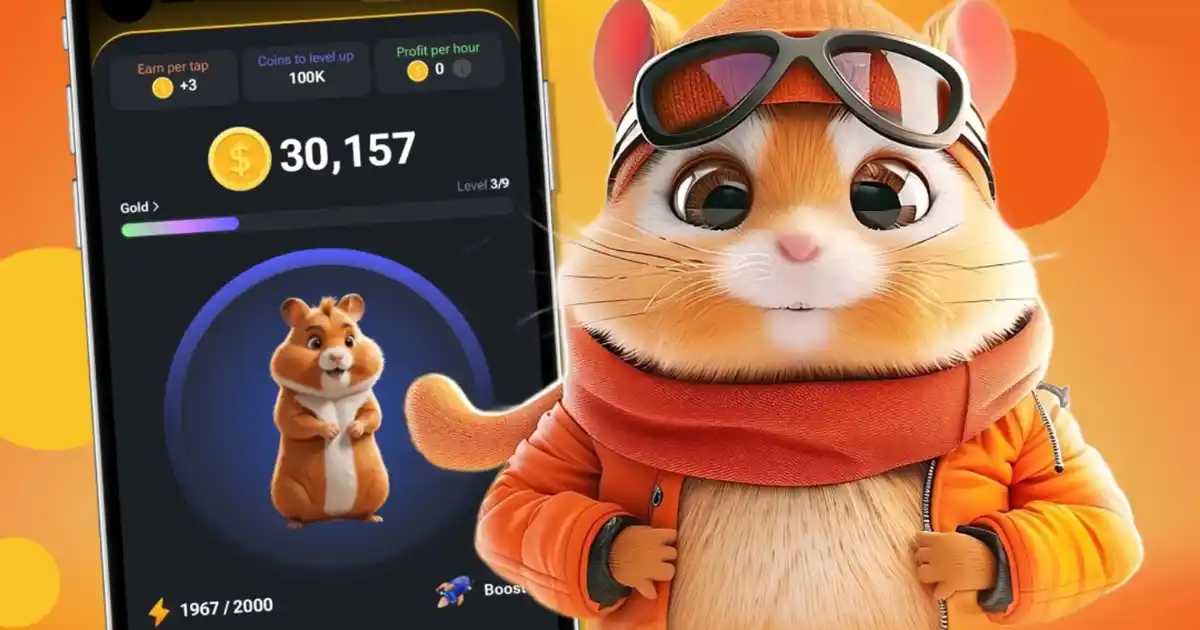
Hamster Kombat launched in March 2024 and grew faster than any product in TON’s history – reaching 100 million users in just two months, a record milestone (Changelly, 2025). The game adds a tycoon layer to the tap mechanic: players manage a virtual crypto exchange run by cartoon hamsters, earning coins by tapping and reinvesting them into exchange upgrades that increase passive hourly income. Puzzle challenges and daily quests add additional earning opportunities.
The $HMSTR token launched on Binance and OKX in September 2024 after a delay from the originally planned July date. The team had earmarked 60% of total token supply for players, marketing it as the largest crypto airdrop in history – a claim that generated enormous hype. Season 2 concluded in March 2025 with a second airdrop distribution. As of early 2026, Hamster Kombat has approximately 10.4 million active players – down sharply from its 300 million peak.
What Works
- Deeper gameplay loop. The tycoon mechanic gives players more to think about than pure tapping – upgrade paths and passive income systems add genuine strategic decisions.
- Token did list on major exchanges. Despite delays, $HMSTR was listed on Binance and OKX, giving players real liquidity.
- Large community. Even after the user count drop, 10+ million active players is a substantial base by any metric.
The Criticism
- Airdrop delays and unfulfilled timelines. The token launch was delayed by months, frustrating players who had invested significant time.
- Low per-player payouts. With 131 million players sharing the airdrop pool, individual payouts were often described as “pennies” relative to months of effort.
- Token price volatility. $HMSTR debuted at $0.01 and has traded as low as $0.002, reflecting the downward pressure that mass airdrops typically create when recipients sell immediately.
- Untrusted partners. The project has been criticized for associations that raised legitimacy questions in the community.
TapSwap (TAPS)
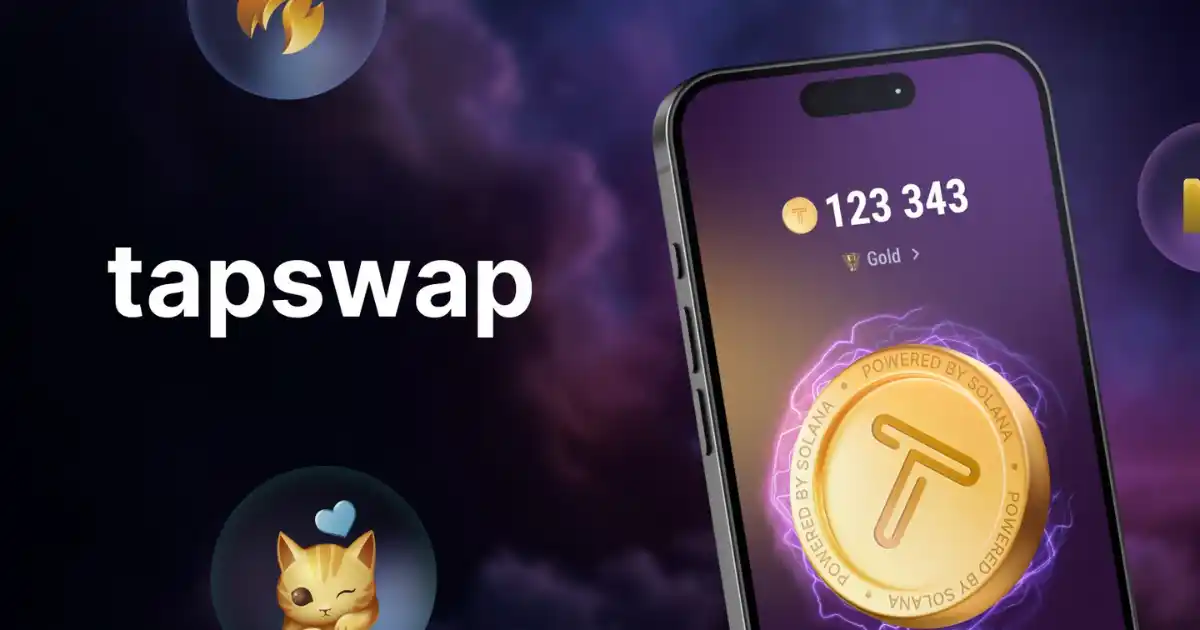
TapSwap entered the space in 2024, quickly attracting over 72 million users with its promise of $TAPS tokens and a city-building metaverse mode called Tappy Town. Initially planned on TON, TapSwap pivoted to launch $TAPS on BNB Chain. Its Season 1 airdrop concluded on February 6, 2025, with a Token Generation Event on February 14, 2025 – ending the long wait for players to claim tokens.
The token is now live on exchanges. However, the community remains deeply divided. While the token did launch – unlike some projects that vanished entirely – the experience for many long-term players has been one of diminishing rewards, account anomalies, and expectations that were not met.
Why It Attracted Millions
- Instant accessibility. Standard Telegram mini-app format with a low barrier to entry.
- Tappy Town added depth. The city-building layer gave players a reason to return beyond pure tapping.
- Notcoin momentum. Launched in Notcoin’s slipstream, many users assumed TapSwap would follow a similar token success path.
The Community Backlash
- Account wipes. Multiple users report that balances and in-game progress disappeared without explanation before the token launch.
- Reward reduction before TGE. Many players believe the economy was deflated before the Token Generation Event, effectively reducing what long-term players earned.
- In-game item deletions. Players report that purchased or earned in-game items were removed overnight with no communication.
TapSwap occupies a grey area: the token launched, which some projects never achieved. But for players who invested months of effort, the outcome rarely matched the implied promise.
X Empire (X)
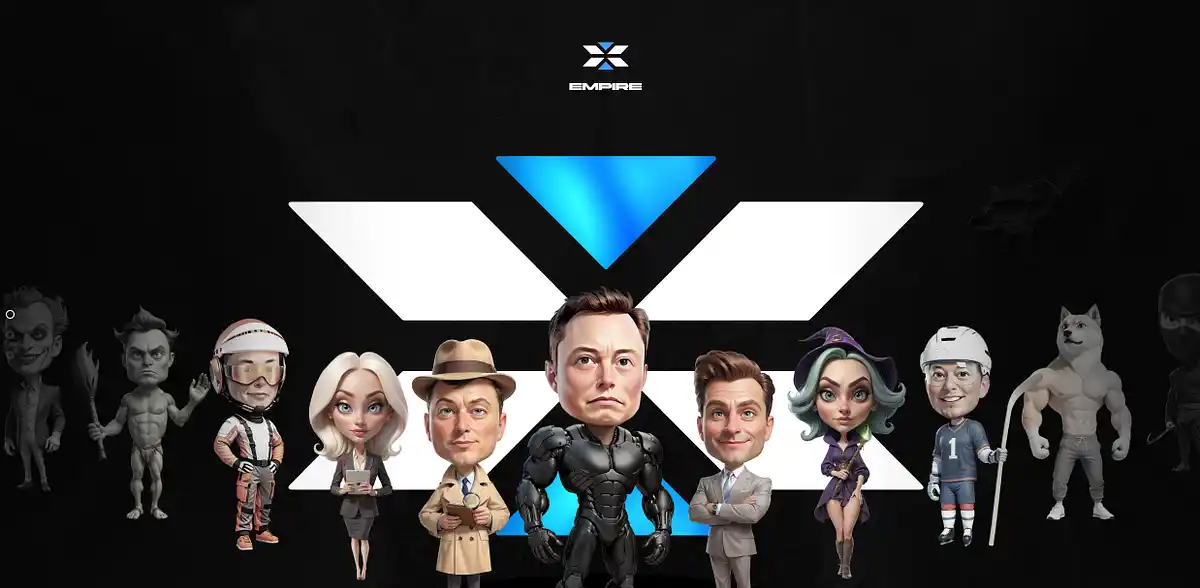
X Empire brought an empire-building twist to tap to earn, allowing players to construct kingdoms, earn $X tokens, and compete on Telegram leaderboards. The game was notable for its transparent developer communications early on, its early-player reward consistency, and its measurable on-chain impact – driving over $17 million in daily trading volume on TON and spiking wallet activity (Analytics Insight, 2025). Its $X token surged 650% shortly after launch for early participants.
However, X Empire is also one of the most controversy-laden projects in the space. Despite the early momentum, serious allegations have emerged from the community.
Early Strengths
- Developer transparency (initially). Early-stage communication was praised relative to peers.
- Reward consistency for early players. Those who joined in the first months reported fair reward distribution before the token launch.
- On-chain impact. X Empire demonstrably drove TON blockchain activity, giving it credibility within the ecosystem.
Why Trust Collapsed
- Stolen identity allegations. Community reports of fake traders and stolen identities used within the platform.
- Unlicensed securities accusations. Critics allege the $X token was offered in a manner that constitutes an unlicensed securities offering in certain jurisdictions.
- Frozen withdrawals. Multiple users report support vanishing and withdrawals freezing without explanation.
X Empire represents one of the clearest examples of how quickly trust can collapse in tap to earn crypto – a game that looked credible in its early months and became deeply contested by the time its token launched.
Catizen (CATI)
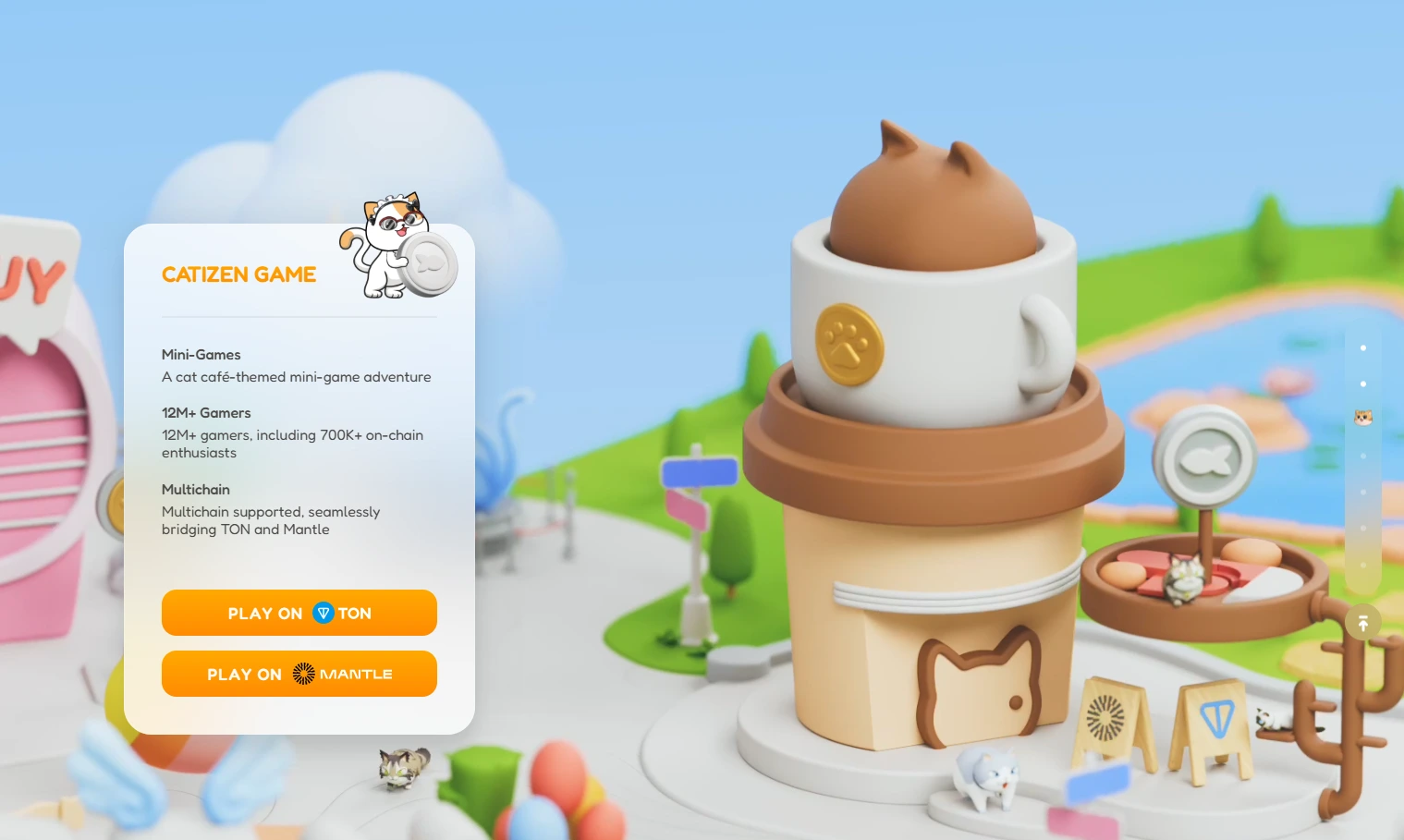
Catizen launched in March 2024 on the TON blockchain with a cat-themed, AI-enhanced approach to tap to earn. Players adopt and merge virtual cats, complete daily quests, and earn $CATI tokens through a combination of tapping, mini-games, and social features. The project reported a peak of approximately 49 million registered players, though active monthly users stabilized around 1 million by mid-2025 (Changelly, 2025).
Catizen’s $CATI token launched with an airdrop in September 2024, distributing 150 million CATI (15% of the 1 billion total supply) to Season 1 players. It listed on Binance, Bybit, and Bitget. A notable development in mid-2025 was an investment from Animoca Brands – one of the most credible institutional investors in the blockchain gaming space – providing meaningful external validation.
Why Catizen Stands Out
- Animoca Brands investment. Institutional backing from a credible, specialist Web3 investor distinguishes Catizen from most of its peers.
- Polished visuals and genuine gameplay. The cat-merging mechanic and AI integration give Catizen more substance than pure clicker games.
- Token delivered on major exchanges. $CATI launched on Binance, Bybit, and Bitget with genuine liquidity.
- Expanding roadmap. The project has announced plans for 200+ games within its ecosystem, positioning itself as a platform rather than a single title.
Concerns
- Airdrop criticism. High-level players complained that a disproportionate share of tokens (9%) was diverted to Binance Launchpool, while lower-level players received larger shares than top performers expected.
- Active user retention. Dropping from 49 million registered users to 1 million monthly actives by mid-2025 illustrates the retention challenge every T2E game faces post-airdrop.
- Overpromising concerns. Some community members feel the 200+ game roadmap and AI integration promises exceed what has been delivered so far.
Among the projects reviewed here, Catizen is currently the one with the most credible institutional backing and the clearest path toward a multi-game ecosystem – though that does not guarantee token performance.
The Real Risks of Tap to Earn Crypto Games
Any honest guide to tap to earn must address the risks directly. The space has an unusually high concentration of projects that either fail to deliver or actively exploit players.
Token Risk: Most Players Earn Less Than They Expect
The earnings math in tap to earn crypto is rarely explained clearly upfront. In-game coins have no value until a token launch. Token launches face enormous sell pressure when hundreds of millions of players receive tokens simultaneously and many cash out immediately. The result is that most late-joining players earn tokens worth a small fraction of the time they invested.
The NOT token lost over 90% of its peak value. HMSTR debuted at $0.01 and has traded significantly lower. The pattern is consistent across the category: early players profit, later players typically do not.
Scam Projects: How to Identify Them
The low barrier to launching a Telegram mini-app means the space is crowded with projects that mimic legitimate games in appearance while having no intention of delivering real value. Common red flags include:
- No verifiable team or legal entity. Anonymous developers with no track record.
- Vague or absent tokenomics. No clear explanation of total supply, distribution schedule, or what drives token value.
- Paid upgrades with no refund policy. Any game asking you to spend real money before a token launch is a significant risk.
- Promises of guaranteed earnings. Legitimate projects do not guarantee returns.
- Token listings on obscure exchanges only. A token not listed on Binance, OKX, or Bybit has very limited liquidity and is much harder to sell.
Retention: What the Data Shows
TON blockchain daily active wallets fell from over 1 million in September 2024 to below 500,000 by December 2024 (TONStats, via BeInCrypto), driven largely by T2E player drop-off post-airdrop. The TON Foundation itself acknowledged that tap to earn games have a shorter lifecycle than other game genres and has stated its 2025 focus will be on mid-core and social games rather than pure clicker mechanics.
Can You Actually Make Money With Tap to Earn Games?
The honest answer is: some people have, most people have not, and the opportunity for most is now smaller than it was in 2024.
Early Notcoin players who grinded through 2024 and sold their $NOT tokens near the launch peak genuinely profited. Players who joined X Empire early saw a 650% token surge. These outcomes were real – but they were available to early movers who participated before the games reached tens of millions of users.
For players joining in 2025 or 2026, the realistic tap to earn crypto outcome is modest. Token values are lower, airdrop pools are shared among more players, and the projects with genuine exchange listings have already launched. The projects yet to launch carry higher uncertainty. The time invested in tapping for months to receive tokens worth a few dollars is not a compelling return by most measures.
The most rational approach is to treat tap to earn as a free, zero-risk experiment in crypto – useful for learning how wallets, airdrops, and token economies work, with a small chance of meaningful reward if you join early on a project that delivers. Never spend money on paid upgrades or boosts in an unproven game.
Frequently Asked Questions
Tap to earn refers to a category of mobile games – primarily on Telegram – where players earn cryptocurrency or in-game tokens by tapping the screen and completing simple tasks. The tokens may later be tradeable on crypto exchanges, though this depends entirely on whether the project successfully launches its token.
Notcoin has the strongest track record – it delivered real tokens to 35 million players, listed on major exchanges, and was backed by the TON Foundation. Catizen is currently the most credible active project, with Animoca Brands investment and an expanding ecosystem. Both should be evaluated with realistic earnings expectations.
For most players in 2025 and beyond, the earnings are modest to negligible. Early participants in Notcoin and X Empire made real money. Players who joined later, or whose projects delayed or cancelled token launches, typically earned very little for significant time investment. The model is more suitable as a free crypto education experience than as an income strategy.
Projects typically generate revenue through in-app purchases (boosts, upgrade packs, energy refills), token launch activities (initial exchange offerings, launchpad partnerships), referral commissions paid by exchanges, and advertising within the game. The tension between player rewards and project revenue is a core reason why many games reduce payouts over time.
Hamster Kombat attracted 300 million users at peak, launched its $HMSTR token after delays in September 2024, and completed a second airdrop in March 2025. Active players dropped to approximately 10.4 million by early 2026. The token has traded significantly below its launch price, reflecting the sell pressure from mass airdrops and the general decline in tap to earn engagement post-listing.

Stefan is enthusiastic about the new technologies, including blockchain. He got to know cryptocurrencies more than 15 years ago, when he mined his first cryptocurrencies on graphics cards. His latest goal is to spread new ways to use cryptocurrencies in the real world.