
The global bug bounty market has been enjoying speedy growth all because of the increasing interest by organizations to discover vulnerabilities in their systems. According to the latest stats by Global Growth Insights, the market was valued at about $1.76 billion in 2025, and rose to about $2.1 billion in 2026. The same report projects that by 2027, the market will be valued at about $2.4 billion, and possibly $7.7 billion by 2035. HackerOne stands among the top platforms offering the bug bounty service.
Key Takeaways
- HackerOne programs paid out $81 million in a single year, a 13% annual rise across more than 1,950 active programs.
- The average active researcher earned about $42,000 annually, while platform-wide only around 19% of submitted reports are valid.
- Your Reputation, Signal, and Impact scores gate access to private programs, and invalid reports reduce how many submissions you are allowed.
- Crypto.com runs the largest program in HackerOne history at $2 million, yet had paid roughly $539,000 in total bounties since joining in 2018.
- HackerOne is a web and application security platform, not a smart contract one, so crypto work here means exchange infrastructure rather than DeFi protocols.
HackerOne runs one of the most established routes into bug bounty hunting. Hunters enjoy access to security research opportunities from some of the largest organizations in the tech and cryptocurrency, including exchanges, wallets and blockchains.
This guide covers what the platform actually pays, how the reputation system decides your access, why good-faith reports can still cost you, what the 2022 insider incident revealed, and what the highest earners do differently.
What the HackerOne Bug Bounty Program Pays in Practice
At first glance, HackerOne’s payout figures are undeniably impressive. In the recent twelve month period, HackerOne reported that its programs paid $81 million to researchers over twelve months, up 13% year on year, with the ten biggest programs accounting for $21.6 million of that and the hundred highest all-time earners having collectively taken $31.8 million. As at August 2026, HackerOne manages more than 1,950 bug bounty programs for clients including Crypto.com, GitHub, Goldman Sachs, and the US Department of Defense.
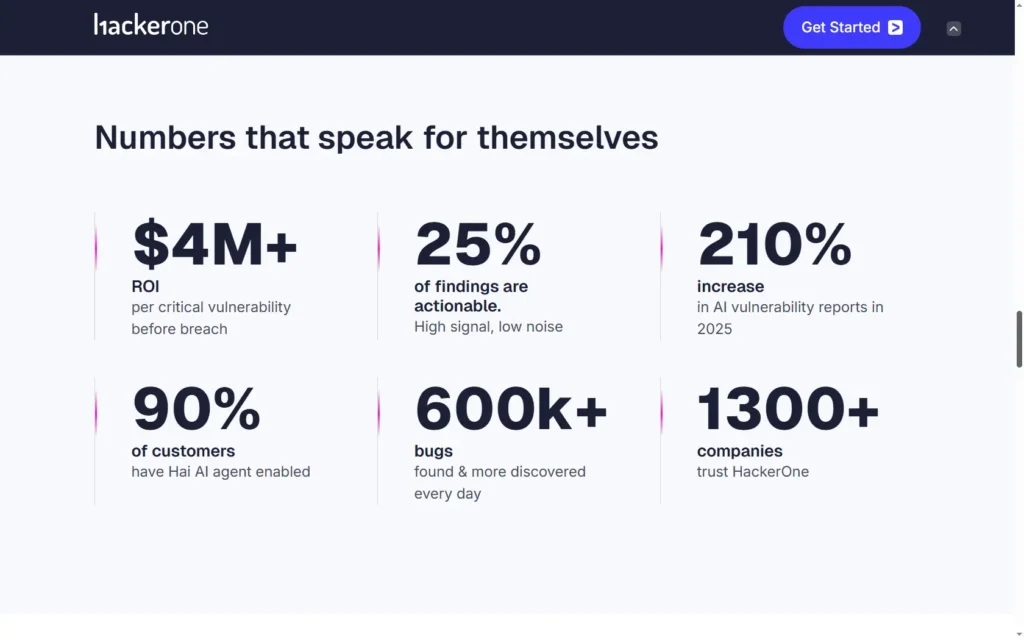
While the stats are indeed impressive, one statistic catches the eyes of researchers. HackerOne claims that annual incomes for active bounty hunters average about $42,000. That sounds encouraging until you notice what “active” excludes. It is an average across people already submitting valid work regularly, not across everyone who signs up, and the distribution behind it is extremely skewed by the top hundred earners. A realistic first year looks nothing like $42,000.
The cryptocurrency sector provides one of the clearest examples of why advertised maximum rewards should be interpreted carefully. When Crypto.com upgraded its program to a $2 million maximum in December 2024, it became the largest bounty available anywhere on the platform.
But the company had been running a program since May 2018, and reporting at the time noted it had paid a total of $539,130 in bounties across those years, with its top bounty band sitting between $3,759 and $40,000. The $2 million is a ceiling reserved for a catastrophic finding, not a description of what the program routinely pays.
For that reason, every advertised maximum bounty should be viewed in context. The advertised number tells you what the worst imaginable vulnerability would be worth. The historical payout data on the program page tells you what the program actually does.
Reputation, Signal, and Impact: The Scores That Control Your Access
While many bounty hunters tend to put more focus on their reputation score, assuming it is the only number that matters, HackerOne evaluates performance based on three separate metrics, each with a different purpose.
Reputation is a cumulative score gained or lost as reports close, weighted by bounty size and severity. Signal is your average reputation per report on a scale from -10 to 7, so it measures accuracy rather than volume. Impact runs from 0 to 50 and reflects the average severity of what you find.
The consequential detail is in HackerOne’s own documentation: a report closed as Not Applicable costs you reputation points, and the company has stated plainly that as reputation falls, the system gradually reduces how many reports you are permitted to submit. Poor accuracy does not just look bad on a profile. It throttles your ability to keep working.
Signal is particularly valuable because it plays a major role in determining access to private bug bounty programs. Experienced researchers consistently point to private invitations as the most profitable opportunities on HackerOne, largely because they attract fewer competitors than public programs. One researcher with over $1 million in career earnings described holding more than 300 private invitations and earning substantially more from them than from public programs, precisely because the competition is thinner.
Three practical habits follow directly from how the scoring works:
- Withdraw before a weak report closes. Self-closed reports are excluded from Signal, so pulling a submission after a triager signals it is heading for Informative costs you nothing.
- Chain findings rather than splitting them. One chained report demonstrating real impact scores better on Impact than three separate low-severity submissions.
- Verify before submitting, not after. One invalid closure drags Signal down faster than several valid mediums lift it, because the scale is asymmetric.
Why Good-Faith Reports Can Still Count Against You
Among rookie HackerOne bounty hunters, one of the most common pain frustrations is less about vulnerabilities and more about how the platform evaluates submissions. Many researchers have pointed to situations where they responsibly disclosed a potential security issue, expected no financial reward, and still ended up losing reputation when the report was closed as Not Applicable.
This experience often becomes more frustrating when researchers compare HackerOne with competing platforms. For instance, BugCrowed generally treats Informative reports as legitimate contributions rather than reasons to penalize a researcher. As a result, someone moving between the two platforms can feel as though the same effort is praised in one environment but viewed as poor performance in another.
The contrast has fuelled ongoing debate within the bug bounty community about which approach is fairer. However, HackerOne’s counter argument is easier to understand when approaching the challenge from the point of view of the organizations running these bounty campaigns. The company has stated that across its programs roughly 19% of submitted reports are valid, with some programs seeing as little as 6%.
A security team facing four invalid reports for every real one is not being precious about noise. The scoring system exists because the signal-to-noise ratio is genuinely terrible, and every hour spent on a non-issue is an hour not spent on a real vulnerability.
There is also a blunt commercial reality that experienced program managers state openly: HackerOne’s paying customers are the companies running programs, not the researchers submitting to them. The platform is a marketplace, and when its interests conflict with yours, it behaves like a marketplace. That is not a scandal, but it is the correct mental model for interpreting every triage decision you disagree with.
You may also like: Crypto Testnets: Earn Free Tokens by Testing New Blockchains in 2026
Duplicates, Disputes, and the Limits of Mediation
However, one of the most contentious issues among bounty hunters are disputes over duplicate reports. Imagine this: A researcher submits what appears to be a unique vulnerability, only for it to be marked as a duplicate of an earlier report covering a different issue. Later, the original report is marked as informative and the issues quietly fixed. Researchers reasonably ask why a company patches something it classified as a non-issue. Mediation requests in these cases frequently go unanswered, and once a report is closed, commenting on it is often disabled.
Duplicates deserve particular attention because bug bounty hunting is an intensely competitive environment. As one long-time hunter put it, there is no prize for finishing second. Anything findable through a textbook technique on a mature public program has already been found. If it somehow has not been fixed, your report gets flagged as a duplicate anyway.
It is worth noting how differently the same platform reads to different people. Alongside the complaints, newer researchers describe HackerOne as the platform that replies fastest, explains its decisions most clearly, and demonstrates actual understanding of the issue, with Bugcrowd as the frustrating one. The pattern across every platform in this market is the same: whichever one a researcher has had a bad month on is the worst one. Treat single-experience verdicts, in either direction, as weak evidence.
The researchers who earn the most rarely rely on luck to avoid duplicates. Rather, they deliberately focus on complex products that require deep understanding before you can even begin, then stay on them for months or years. Hunters using that approach report duplicates being uncommon even on low-hanging findings, simply because fewer people ever got far enough to look.
The 2022 Insider Incident and What It Says About Report Visibility
One accusation that circulates in community discussions turns out to be entirely accurate. In 2022, a HackerOne employee accessed vulnerability reports submitted by researchers and disclosed them to affected customers off-platform to claim the bounties personally. The person had access to the vulnerability database between 4 April and 23 June 2022, contacted seven customers, and collected rewards through a sockpuppet account before being terminated on 30 June.
The detection is instructive. A customer flagged an off-platform disclosure that looked suspiciously similar to a report already filed through the platform, and expressed scepticism that it was a genuine bug collision. HackerOne then traced access logs to a single employee and followed the payment trail to a linked bank account.
Two conclusions follow, and they point in opposite directions. The uncomfortable one is that your report is readable by platform staff before the program ever sees it, which is an inherent property of a triaged marketplace rather than a fixable bug. The fairer one is that HackerOne published a detailed post-mortem of its own worst incident rather than burying it, which is more than most platforms in this market have done.
What the Highest Earners Actually Do Differently
The community discussions that produce genuinely useful advice tend to come from people who are making the model work, and their answers are strikingly unglamorous. Asked for the top three technical skills, one researcher with over $1 million in career earnings answered consistency, three times. Asked what separates a hobbyist from someone who makes a living through bug bounties, the answer was not an advanced certification, a secret methodology, or an expensive toolkit. It was the confidence that you can reliably reach a target income month after month through disciplined research.
Several of the habits shared by top earners challenge assumptions that are common among beginners. Automation is less central than the influencer content suggests, with some of the most successful hunters describing an almost entirely manual methodology and accepting that they miss certain classes of finding as a result.
Rather than relying heavily on automated scanners, they prefer to inspect applications themselves. Most accept that this approach may cause them to miss certain categories of vulnerabilities while allowing them to identify subtle business logic flaws that automated tools frequently overlook.
When it comes to learning, experienced hunters consistently recommend the same core resources. HackerOne’s own Hacker101 material, the PortSwigger Web Security Academy, published write-ups, and the platform’s Hacktivity feed of disclosed reports. Running a vulnerability disclosure program and a paid program in parallel is a common recommendation, using the unpaid one to experiment and build confidence while the paid one supplies the incentive.
One financial detail rarely mentioned in beginner content: bug bounty income is taxable, and researchers earning at a professional level report effective rates around a third of gross. Budget accordingly rather than treating the headline bounty as take-home.
Does HackerOne Make Sense if Your Interest Is Crypto?
Partly, and it depends entirely on what you can actually test. HackerOne is fundamentally a web and application security platform. The crypto presence is real but concentrated in exchanges and consumer apps, where the attack surface is authentication, authorisation, business logic, and API design rather than Solidity. If your skills are web2, the crypto programs here are genuinely accessible to you. If you want to audit smart contracts, this is the wrong platform.
| Platform | What you test | Skills required |
|---|---|---|
| HackerOne | Exchange web apps, APIs, mobile clients, corporate infrastructure | Web application security, business logic, API testing |
| Immunefi | DeFi protocols, bridges, layer-1 and layer-2 chains | Solidity, Rust, Move, economic attack modelling |
| HackenProof | Exchanges, wallets, smart contracts, CeFi infrastructure | Mixed web2 and smart contract |
The wider point for anyone browsing the range of crypto tasks and activities is that bug bounties are not an earning method in the sense the rest of that category uses the term. Crypto faucets pay small amounts for no skill, testnet participation rewards care and consistency, airdrop farming rewards early positioning, and quest platforms package structured tasks with predictable rewards. Bug bounties sit in a different category entirely: a professional skill that happens to be paid per result.
That distinction matters because content presenting bug bounty hunting as accessible side income is the same pattern as earning claims that quietly omit the work involved. If you want predictable hours-to-payment ratios, structured microtask programs are the honest answer.
People also read: Crypto Microtasks: Types, Best Platforms, and Realistic Earnings in 2026
Why Programs Are Leaving the Platform
Researchers have noticed programs shutting down and the remaining ones becoming stingier, and the explanation is mostly economic. Running a program on HackerOne is expensive before a single bounty is paid: reported figures put a basic disclosure program in the region of $8,000 to $12,000 annually, a private bounty program at roughly $25,000 to $40,000 in platform fees, and a fully managed program with triage services well into six figures, plus a percentage fee on every payout. When budgets tighten, that fixed cost is an obvious target.
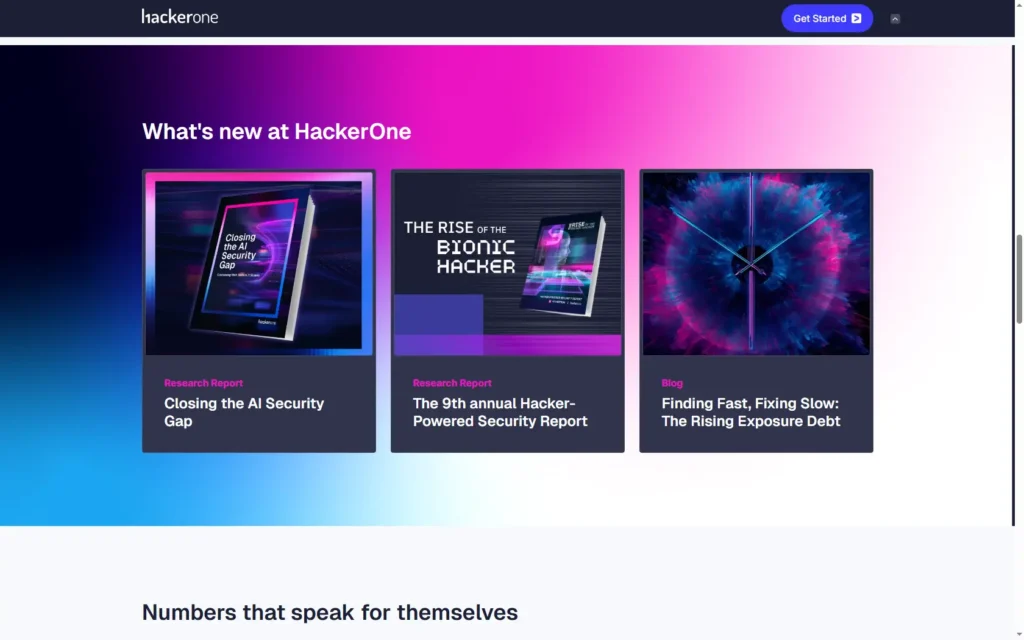
The second pressure is artificial intelligence arriving on both sides of the process simultaneously. HackerOne’s own reporting documents a rise of more than 200% in AI-related vulnerabilities and a 540% surge in prompt injection findings, with 1,121 programs putting AI in scope and autonomous agents submitting over 560 valid reports. Roughly two thirds of surveyed researchers now use AI tooling.
For researchers the practical consequence is a squeeze from both directions. Generated submissions flood triage queues, which degrades response times and makes programs more defensive about what they accept. Meanwhile triage itself increasingly involves automation, which researchers experience as decisions that do not engage with the argument in the report. The consistent advice from people still doing well is unchanged by any of this: verify everything you submit, because a report you cannot personally defend in a dispute is worse than no report at all.
Scepticism about security theatre is warranted on the other side of the transaction too. A funded bounty program signals that a company takes security seriously enough to pay for it, but it proves nothing on its own, in the same way a clean audit score is not the same as a secure protocol.
Frequently Asked Questions
Most likely nothing for the first several months. The $42,000 average applies to researchers already submitting valid work consistently, and the distribution is dominated by full-time professionals. Treat the first year as paid training that occasionally produces a payout rather than as income.
Yes. Not Applicable closures cost reputation points, drag your Signal down, and as reputation falls the platform reduces how many reports you may submit in a given period. If a triager signals a report is heading for an invalid closure, withdrawing it first avoids the Signal damage entirely.
Programs sometimes group reports by underlying root cause rather than by observed symptom, which can make two apparently unrelated findings a single issue internally. That said, researchers do report questionable duplicate closures, and mediation is inconsistent. Document your reasoning clearly and request mediation, but calibrate your expectations.
By most accounts yes. Experienced hunters consistently report earning more from private programs than public ones because the competitive field is far smaller. Access is gated on Signal and Impact thresholds plus recent resolved reports, which is the practical reason to protect your accuracy from the beginning.
Automated tooling is good at surface-level findings and poor at complex business logic and multi-step chains, which is where the meaningful bounties have always been. The barrier has risen for low-effort submissions and moved very little for researchers doing genuine analysis.
