
Crypto exchange Coinbase distributed over $150 million in rewards since the beginning to the death of its learn and earn program. Users would make between $20 and $50 every month with quizzes paying between $3 and $5.
Key Takeaways
- Coinbase officially ended its quiz-based Learning Rewards program on May 27, 2025, and hasn’t named a direct replacement.
- The mechanic moved into Base App Quests (the rebranded Coinbase Wallet), which pays crypto for on-chain actions like swapping and staking instead of quizzes.
- Coinbase’s current Earn suite tops out at 13% APY on select staking assets, but its 3.50% USDC reward is now locked behind a Coinbase One membership starting at $4.99/month.
- Community accounts of the old program split hard: some collected $200+ with zero issues, others say a promised reward never arrived.
- Binance still runs its own Learn and Earn program for new, verified users, but it isn’t available to US residents.
The original idea of Coinbase Learn and Earn was to offer one of, if not the easiest ways to collect cryptocurrency. Its model is simple: you watch a video, pass a short quiz, and get paid in the form of the token you just learned about. In this review, you will learn about what actually happened to this program, and what alternatives you have in the market today.
Is Coinbase Learn and Earn Still Available?
No! After being in operation since December 2018, Coinbase Learn and Earn officially ended on March 27, 2025, based on Coinbase’s help center. And, Coinbase has not been in any hurry to name any immediate replacement. In fact, Coinbase says it’s only exploring new ways to let users earn.
Across several discussion threads within the cryptocurrency community spanning roughly a year are many reports indicating that the program is indeed gone. In fact, people describe logging into the app and finding the learning-rewards section simply empty, with no announcement beforehand.
Many users were displeased by the discontinuation of learning rewards on Coinbase. Some said that their primary reason for staying on Coinbase over every other crypto exchange network was the provision of the learning rewards, and the discontinuation made them consider closing their accounts entirely.
What Coinbase Learn and Earn Actually Paid, Back When It Ran
Prior to its closure, Coinbase’s learn and earn program operated on a very simple model. A user would attend short lessons, spanning usually about 2- 3 minutes. And afterwards, the users would complete a quiz.
On passing the quiz, you’d receive a small amount of that token, often only a few dollars’ worth. One user reported earning around 30 different reward tokens worth roughly $100 combined over time, describing most of the individual tokens as obscure and low-value.
But one pattern was seen throughout Coinbase, and other Learn and Earn options. The small rewards, mostly in illiquid tokens, would often lose value severely over time. One user’s Learning Rewards token balance reportedly fell from about $146 to roughly $49 over the course of a year. Another said a token they’d been paid in later lost about 90% of its value. Just like general cryptocurrency, free earnings carry high risks.
What Replaced Coinbase Learn and Earn
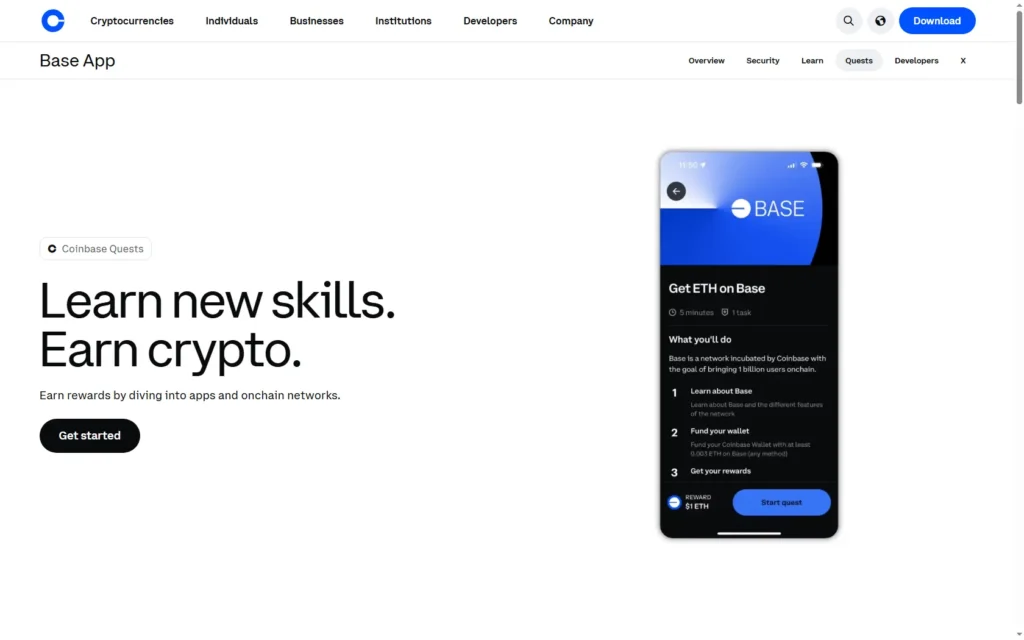
A look into events indicates that Coinbase’s reward system actually simply moved house. A short while after the closure of the Learn and Earn, in July 2025, Coinbase rebranded Coinbase Wallet into Base App, an all-in-one platform for trading, payments, and social features that opened globally in more than 140 countries by December 2025.
Deep within the Base App came the Base App Quests that pay users in crypto for completing regular on-chain activities including swapping, staking, and delegating. Now you get paid for real on-chain actions, rather than answering quiz questions.
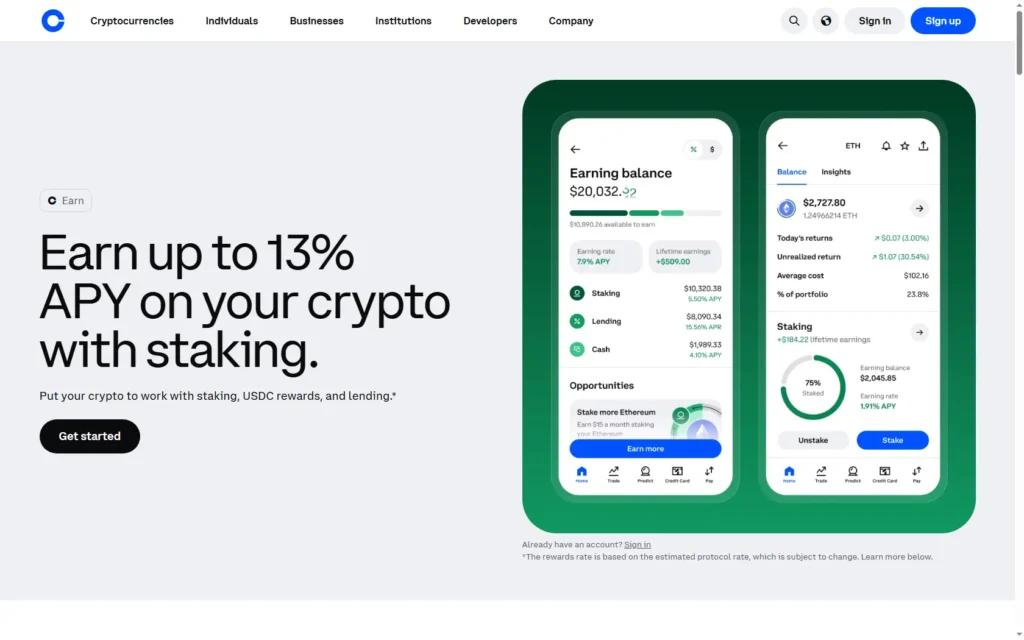
Outside of the Base app, Coinbase offers the Earn Page which is primarily focused on staking USDC rewards. The rates of staking vary depending on the asset, and start from under 2% on Ethereum, to 13% APY on Cosmos (ATOM) at the time of writing.
Coinbase also reports that they paid customers over $450 million in staking rewards in 2024, a figure worth treating as self-reported, since it comes from Coinbase’s own marketing page rather than an audited filing. New users can also collect a one-time sign-up bonus just for funding an account, and Coinbase separately runs a cashback-style track through its debit and credit cards.
Read also: Crypto Signup Bonuses: Best Free Bonus Offers Ranked & Verified
The Catch Nobody Advertises: “Free” Earning Often Isn’t
It is becoming a common belief that rewards often marketed as Free, come with a hidden cost. For instance, in the old learn rewards system, some quests bearing more rewards demanded that a user sign up for a paid subscription with a mobile carrier partner before the reward would actually pay out. In other cases, the partner quest required that users purchase a physical hardware device first.
Notice, in the aforementioned cases, the rewards only came after real money was spent, rendering them ‘NOT FREE.’ This same pattern is noticed in other ‘capital-free’ platforms like quest aggregators, that turn out to require an existing balance to claim what’s advertised as an airdrop.
But, did the pattern actually disappear with the old learn program? The answer is NO! In fact, Coinbase’s own USDC rewards page now states its 3.50% APY is available exclusively to Coinbase One members, a paid membership starting at $4.99 a month. What’s more surprising is initially, this reward system was open for any Coinbase user who held USDC. But now, it is no longer free to access.
If a platform claiming to offer free crypto demands a purchase or a subscription before payout, you must weigh it against the actual returns. Do not just trust any reward platforms that look very generous.
Was Coinbase Learn and Earn Actually Worth It While It Lasted?
While there are indeed many complaints surrounding the Coinbase Learn and Earn program, there are equally community accounts that tell a completely different story. Some users report better experiences with rewards arriving within minutes, and quizzes being ridiculously easy.
In fact, one user reported they’d collected over $200 across the program’s lifetime with no issues at all. Set against that is a smaller but detailed set of accounts describing a promised reward that simply never arrived. And even after mounting complaints, Coinbase support was unable to resolve the issues.
People also read: Learn and Earn Crypto Programs: The Best Free Ways to Get Paid While You Learn in 2026
How to Actually Earn Crypto With No Starting Capital in 2026
So, how can you earn with literally zero dollars to start now that the quiz program is gone? After asking this question on a certain community forum, the beginner got several suggestions in the responses. Yet, most of those methods were already ruled out by the person asking.
Learn-and-earn programs elsewhere that still required an existing on-chain transaction fee to collect, a play-to-earn game that needed gas fees to withdraw, and niche subreddit giveaways nobody could vouch for.
Of all methods suggested, the two that survived scrutiny require skill or time rather than capital, and both are less accessible to a true beginner than a quiz ever was. DoraHacks and Gitcoin run web3 hackathons and open bounties that are free to enter and pay out in crypto or grant funding for working software. However, they invite participants with at least basic coding ability.
Testnets for new blockchain networks are genuinely free to participate in and sometimes lead to a token reward when the network launches, though that reward is never guaranteed and payouts can take months or years to materialize. Faucets and small microtask platforms exist and do pay out, but the amounts are small enough that they’re closer to pocket change than an income source.
Coinbase vs Binance Learn and Earn in 2026
Is Coinbase the first platform to try the learn and earn model? NO! Binance, the largest crypto exchange network, has a learn and earn program that remains active as of August 2026. This model is open primarily to new, KYC-verified users who create and verify an account within a set window.
However, Binance learn and earn isn’t available to US residents or in other regions where Binance.com itself is restricted. See our full Binance Learn and Earn program review for eligibility and payout details.
| Platform | Status in 2026 | Who can join | Typical reward |
|---|---|---|---|
| Coinbase (original quiz program) | Ended May 27, 2025 | N/A | Replaced by Base App Quests and staking |
| Base App Quests (Coinbase) | Active | Base App / Coinbase Wallet users | Small crypto rewards for on-chain tasks |
| Binance Learn and Earn | Active | New, KYC-verified users; not available in the US | Reported at roughly $1 to $5 per campaign |
Frequently Asked Questions
Coinbase hasn’t confirmed a return. Its support team has said only that it’s exploring alternative programs, without naming one. Base App Quests is the closest thing running today, though it works differently: no quizzes, and rewards are for completing on-chain actions rather than answering questions.
Yes, in the US crypto earned through a learn-and-earn program generally counts as income at its fair market value on the day you receive it, separate from any capital gains tax owed later if its value changes before you sell.
No. Binance’s program is restricted to regions where Binance.com operates, and the US is not one of them.
For staking, no. Coinbase allows starting with as little as $1 in a supported asset. For USDC rewards, the requirement has shifted: the 3.50% rate now requires a paid Coinbase One membership rather than just holding USDC.
