Key Takeaways
- Crypto tasks cover four main blockchain activity types: faucets, surveys & microtasks, bounties, and testnets.
- All four methods can be started without upfront financial investment.
- Earning potential: from cents per day (faucets) to thousands per discovery (bug bounties).
- Required skill: faucets need none; bug bounties require developer expertise.
- Each method rewards a different kind of contribution: attention, opinion, skills, or testing effort.

Crypto tasks are small, defined actions that blockchain networks and crypto projects pay users to complete. Unlike trading or investing, crypto tasks reward you for contributing time, skills, or feedback – not capital. No upfront investment is required to get started with any of them.
Blockchain activities in this category cover four distinct methods: faucets, surveys and microtasks, bounties, and testnets. Each one serves a different purpose for the projects running them, attracts a different type of participant, and offers a different earning profile. Some pay cents per action; others can pay thousands for a single contribution.
This guide gives you a complete overview of all four crypto task types – how each works, what you can realistically earn, who it is suited for, and where to find the best opportunities. Each section links to a dedicated deep-dive guide for full platform details and step-by-step instructions.
Why Crypto Projects Pay for Crypto Tasks and Blockchain Activities
Before exploring each category, it helps to understand the underlying logic. Why do blockchain projects pay free crypto to regular users for these activities?
Every crypto project needs three things at different stages of its development:
- Visibility and community growth: New projects need users to know they exist, talk about them, and share them. Faucets, surveys, and social bounties serve this role.
- Feedback and real-world testing: Before going live, protocols need humans to use them, break them, and report what goes wrong. Microtasks and testnets serve this role.
- Security assurance: Code vulnerabilities can cost projects millions. Bug bounties incentivize skilled researchers to find problems before bad actors do.
In each case, the project gets something valuable. The user gets a crypto reward. That exchange is the foundation of all four task-reward categories covered in this guide.
How Crypto Task Platforms and Blockchain Activity Sites Work
Across all four categories, most platforms follow a similar operational model. Understanding this model helps you avoid common frustrations and set realistic expectations.
The intermediary model
Most task platforms sit between the paying party (a project, company, or protocol) and you (the task completer). The project pays the platform; the platform distributes a portion to you. This means your earnings are always a fraction of what the paying party spends — the platform takes its cut. This is why earnings across most task platforms stay modest.
Examples of platforms: FreeCash.com, Cointiply.com or FreeBitco.in
Balance accumulation and withdrawal thresholds
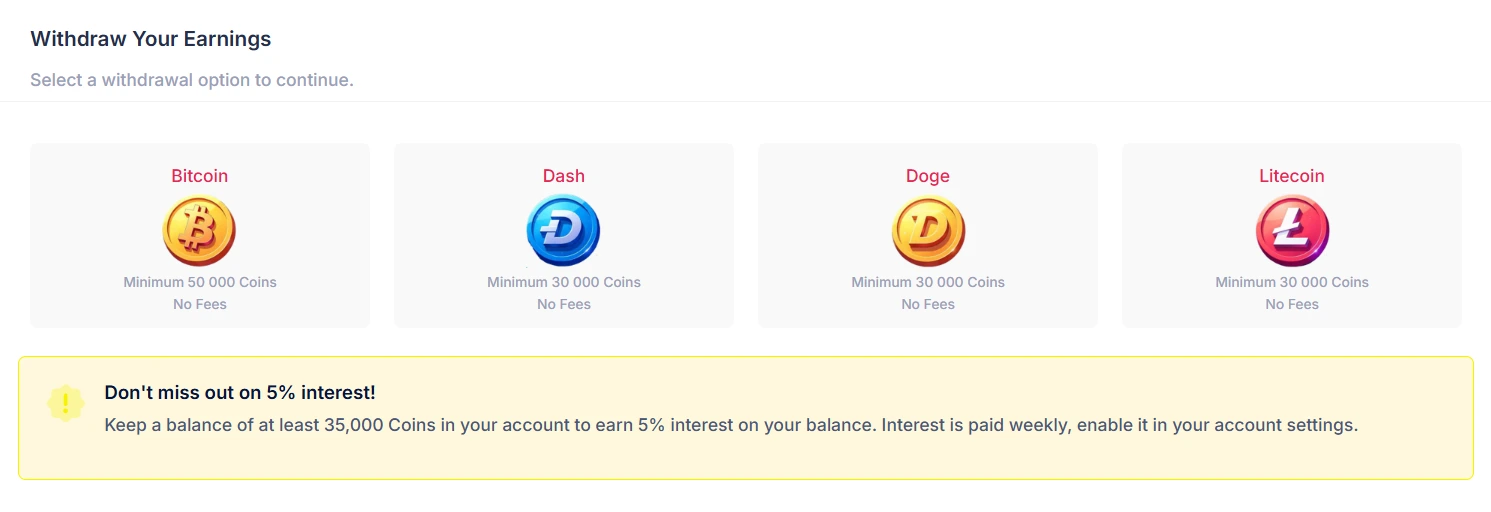
Rather than paying instantly to your crypto wallet, platforms almost always accumulate your earnings in an internal account balance first. You must reach a minimum threshold before you can withdraw. This threshold varies by platform — from as low as $0.50 on some faucets to $5–$20 on some bounty platforms. Always check the threshold before committing time to a new platform.
Regional differences
Task availability, offer quality, and earning potential vary significantly by country. Users in the US, UK, Canada, and Western Europe typically see more crypto tasks and higher-paying offers. This applies across all four categories, though testnets are the least regionally restricted since they focus on technical activity rather than advertiser-driven surveys or offers.
Network fees on withdrawal
When you withdraw, you pay blockchain transaction fees (gas fees). On Ethereum-based payouts, these can be significant relative to small balances. Platforms paying in Bitcoin or on cheaper networks like Solana have lower withdrawal costs. Factor this in when choosing platforms and deciding when to withdraw.
Verification and anti-fraud systems
All serious platforms verify task completion before paying. Faucets use CAPTCHA and time locks. Survey platforms use screening questions. Bounty platforms review submissions manually. Testnet programs use on-chain activity snapshots. Trying to game or automate these systems typically results in account bans and forfeited earnings.
The Four Types of Crypto Tasks and Blockchain Activities
Crypto Faucets
Earn tiny amounts of crypto by completing simple claims, CAPTCHAs, or short crypto tasks at regular intervals
Crypto faucets are the simplest and most accessible form of crypto task reward. They distribute small, fixed amounts of cryptocurrency (fractions of a cent to a few cents) to anyone who completes a basic claim action, usually a CAPTCHA or a short wait timer.
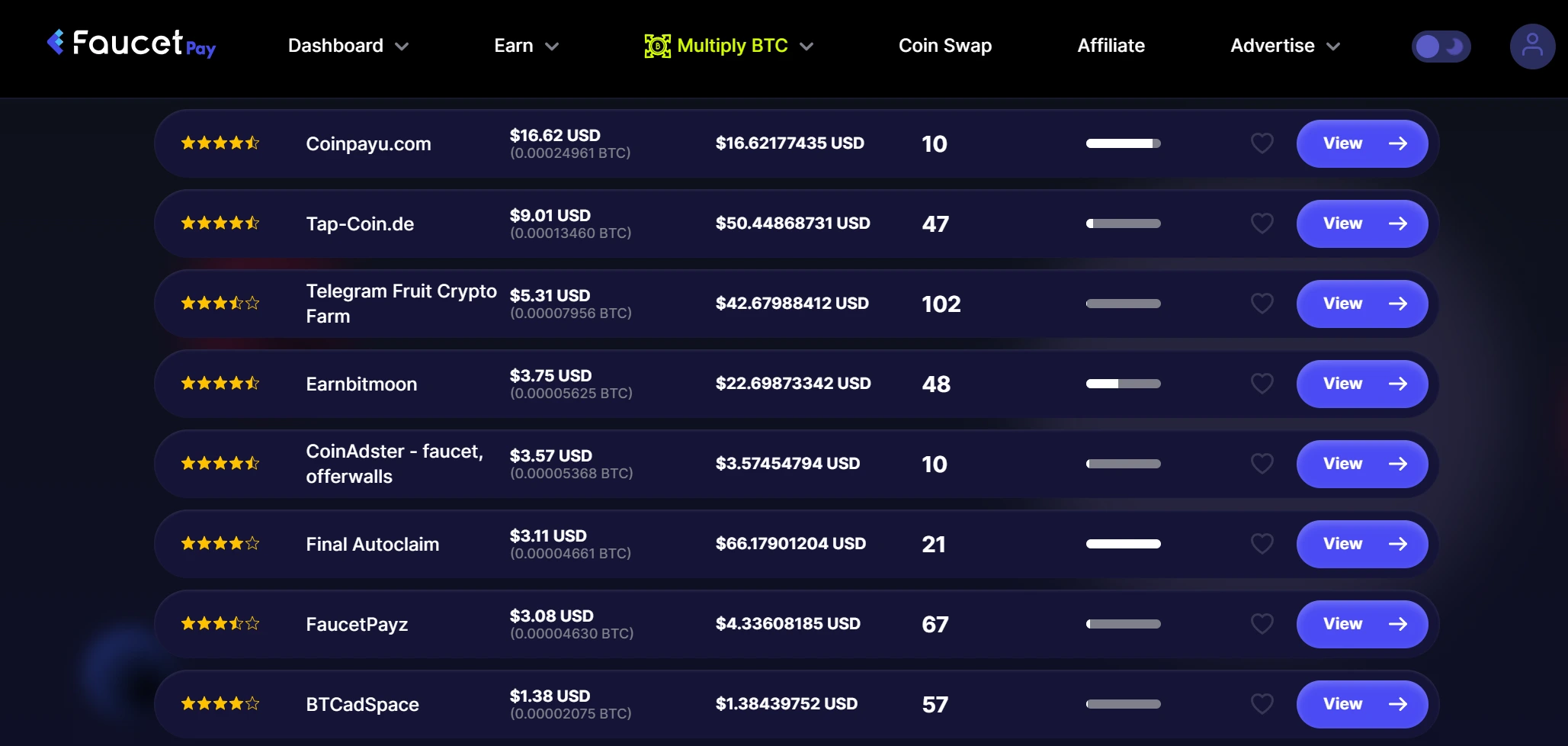
Faucets were originally created to distribute Bitcoin to new users in the early days of the network, allowing people to acquire crypto without buying it. Today, they serve a similar educational function while also driving traffic and engagement to their host platforms.
What you do
- Visit a faucet site and connect or enter your wallet address
- Complete a CAPTCHA or short verification
- Claim your reward — then wait for the timer (usually 5–60 minutes) to reset
- Repeat to accumulate balance toward the withdrawal threshold
What you earn
- Typical reward: 1–100 satoshis (fractions of a cent) per claim
- Daily maximum with consistent claiming: $0.05–$0.50
- Monthly with daily use across multiple faucets: $5–$20
Who it is for
Complete beginners who want to receive their first crypto without any financial commitment. Faucets are not an income source — their value is as a learning tool to understand wallets, addresses, and small transactions.
Key risks
- Extremely low earning ceiling — time spent rarely justifies the output
- Many faucet sites are ad-heavy or low-quality
- Some faucets delay withdrawals or impose high minimum thresholds relative to earning rate
→ Full guide: Crypto Faucets — How They Work, Best Sites, and What to Expect
Crypto Microtasks (Surveys, App Testing, Sign-ups and more)
Complete surveys, test apps, label data, or finish short online tasks in exchange for cryptocurrency rewards
Crypto microtasks represent the broadest and most varied category of task-based rewards. Surveys ask for your opinions, preferences, or demographic data. Microtasks cover a wider range of small online actions like testing apps, labeling data, watching videos, completing game offers, and more.
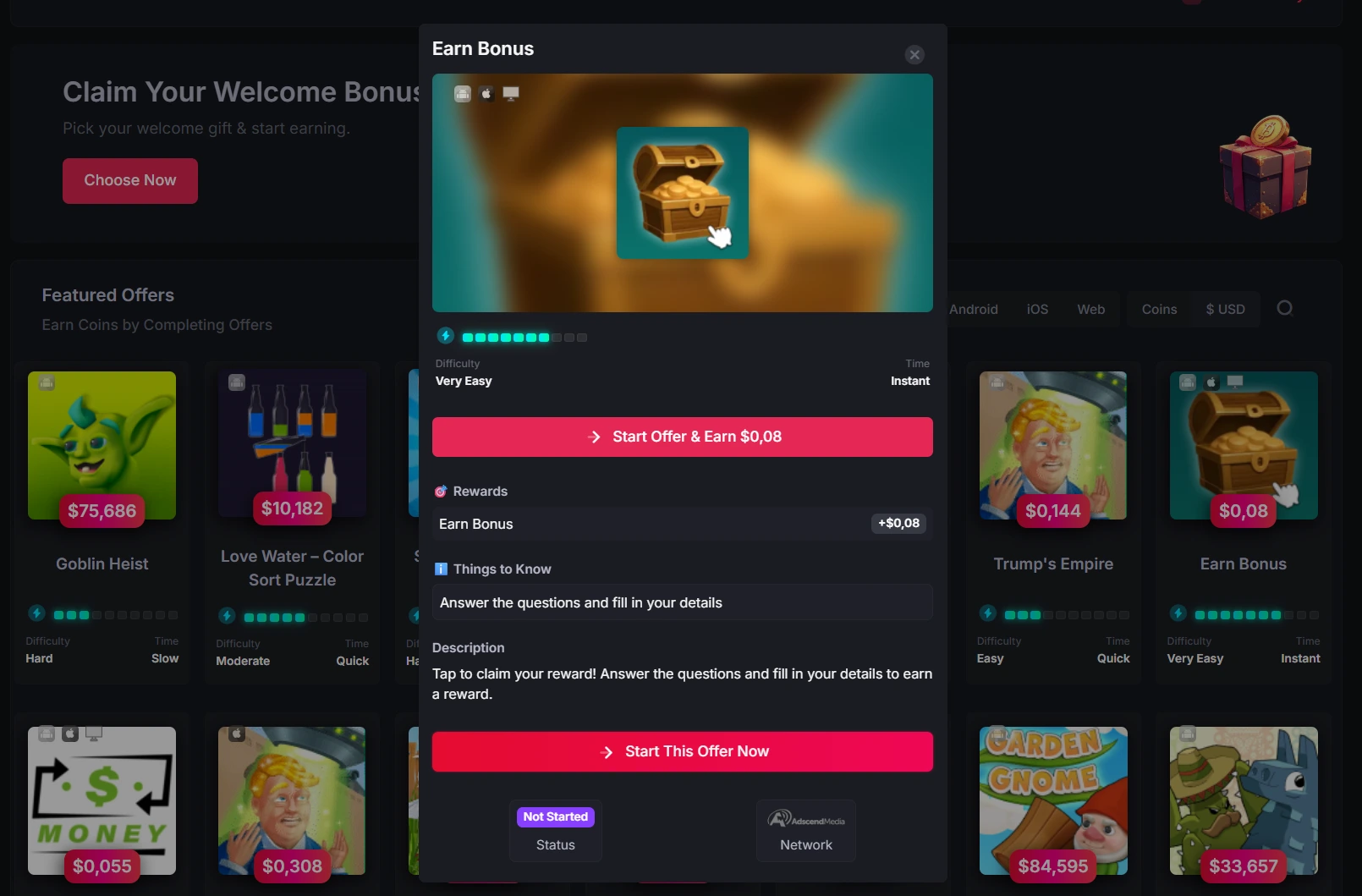
Surveys are the most recognized task type and historically the entry point for many users into this space. But they are just one part of a broader microtask ecosystem. Understanding all the available task types – not just surveys – is key to maximizing earnings in this category.
Main task types in this category
- Surveys and opinion tasks – answer questions about products, apps, or habits
- App testing and game offers – reach levels in mobile play to earn games or test new apps
- Data labeling – categorize images, transcribe audio, verify content
- Sign-up and trial offers – register on platforms or try free services
- Social media and engagement crypto tasks – like, follow, watch, or share content
- Referral and streak bonuses – invite others or maintain daily activity
What you earn
- Average hourly rate: ~$2/hour across most platforms
- Consistent monthly earnings for daily users: $100–$300
- Casual users (30 min/day): $20–$60/month
Who it is for
Anyone who wants to earn more than faucets offer but does not yet have the technical skills for bounties or testnets. This is the most accessible mid-tier earning method – no capital, no coding, and a consistent (if modest) earning ceiling.
Key risks
- Survey disqualifications: you may answer for several minutes and still be rejected
- Inconsistent task availability depending on your country
- Platform reliability: some sites appear legitimate until you try to withdraw
→ Full guide: Crypto Microtasks: Types, Best Platforms, and Realistic Earnings in 2026 Earnings & Risks
Crypto Bounties
Earn rewards for contributing skills — bug reports, content creation, translations, marketing crypto tasks, or development work
Crypto bounties are task-based rewards offered by blockchain projects for specific, skill-based contributions. Unlike faucets or microtasks, which require no particular expertise – bounties reward you for doing something the project genuinely needs done: finding a security vulnerability, creating promotional content, translating documentation, building a tool, or growing a community.
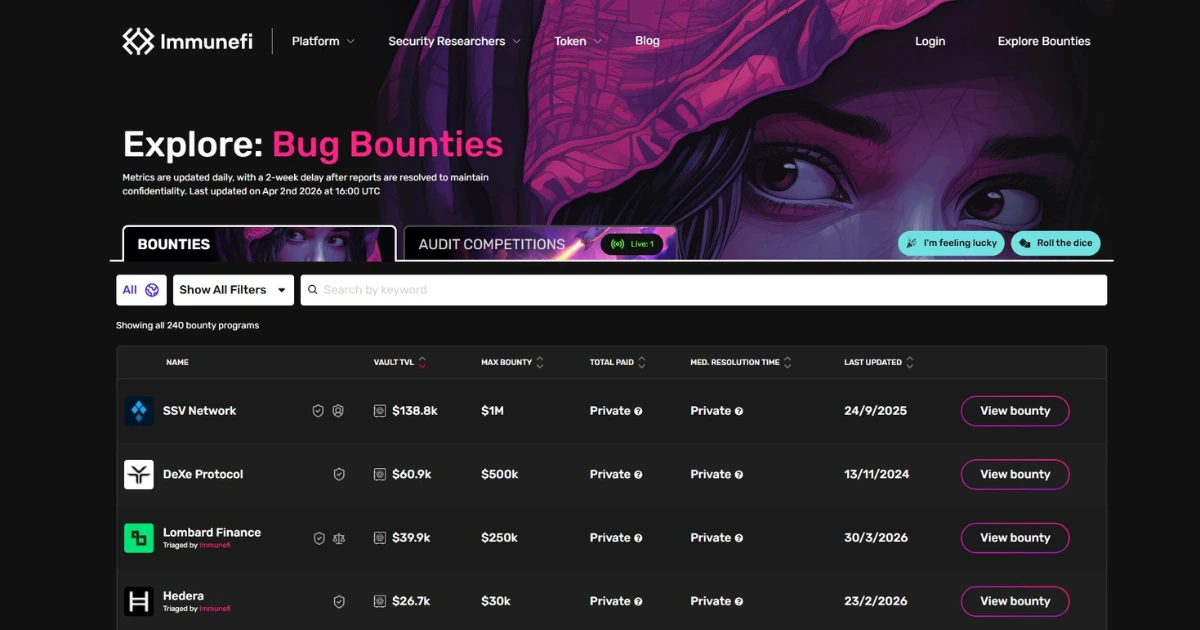
Bounties are offered across a wide skill spectrum. Some are accessible to non-technical users (social media bounties, content creation, translation); others require deep technical expertise (bug bounties, smart contract audits). The higher the skill requirement, the higher the potential reward.
Main bounty types
- Bug bounties: report security vulnerabilities in smart contracts or protocols. Rewards range from hundreds to hundreds of thousands of dollars depending on severity. Platforms: Immunefi, HackenProofhttps://hackenproof.com/, Code4rena.
- Content creation bounties: write articles, produce videos, or create educational content about a project. Accessible to non-developers.
- Translation bounties: translate whitepapers, websites, or documentation into other languages. Accessible to multilingual users.
- Social media and marketing bounties: promote a project through posts, threads, or community engagement. Often lower pay but requires minimal skill.
- Development and tooling bounties: build integrations, tools, or features for a protocol. Platforms: Gitcoin, Superteam Earn, Bountycaster, Dework.
- DAO contribution bounties: complete crypto tasks for decentralized autonomous organizations, often paid in stablecoins like USDC or DAI.
What you earn
- Social and content bounties: $10–$200 per task
- Translation bounties: $50–$500 per project
- Development bounties: $500–$10,000+ per deliverable
- Bug bounties: $500 to $1,000,000+ depending on severity (critical vulnerabilities in major protocols can reach seven figures)
Who it is for
Bounties suit users with specific skills — writers, translators, designers, developers, and security researchers. Non-technical users can start with social media and content bounties. Developers and security researchers can target the highest-paying bug bounty programs.
Key risks
- Quality standards — platforms review submissions and may reject work that does not meet requirements
- Competition — popular bounties attract many hunters, reducing the chance of winning
- Project viability — bounties on low-quality or scam projects may never pay out
- Bug bounty complexity — finding real vulnerabilities requires significant technical skill and time investment
→ Full guide: Crypto Bounties
Crypto Testnets
Earn future token rewards by helping blockchain projects test their networks and applications before mainnet launch
Testnets are testing environments that blockchain projects run before their main network launches. They mirror the real blockchain – same rules, same architecture, same interfaces – but use tokens with no real monetary value. Developers use them to find bugs. Projects use them to stress-test infrastructure. And users can earn rewards by helping test features and providing feedback.
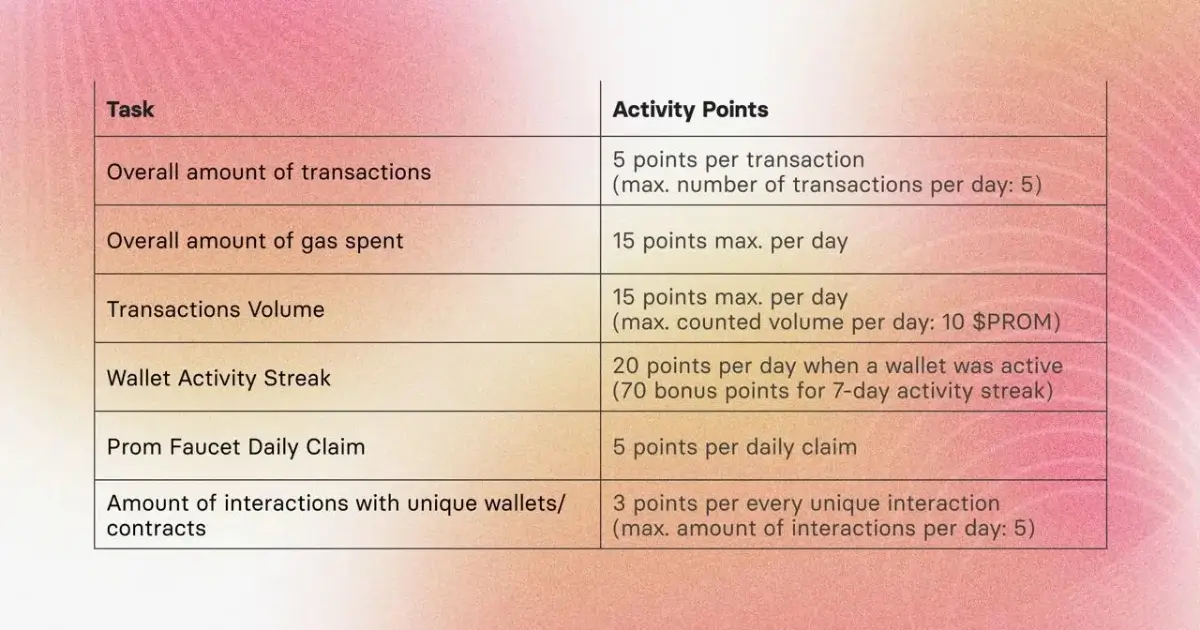
The key distinction with testnets is that rewards are often retroactive and speculative. You participate using testnet tokens (which have no value), and if the project later launches a mainnet token and decides to reward early testers, your testnet activity qualifies you for an airdrop. Some projects run incentivized testnets with clearly defined rewards; others reward participants unexpectedly months later.
What you can do on a testnet
- Complete transactions: swap tokens, bridge assets, use DeFi features in the test environment
- Test dApps: interact with lending platforms, DEXs, NFT marketplaces, and wallets running on the testnet
- Run a node or validator: more technical; helps stress-test the network’s infrastructure
- Report bugs: flag errors, UI issues, or unexpected behavior to the development team
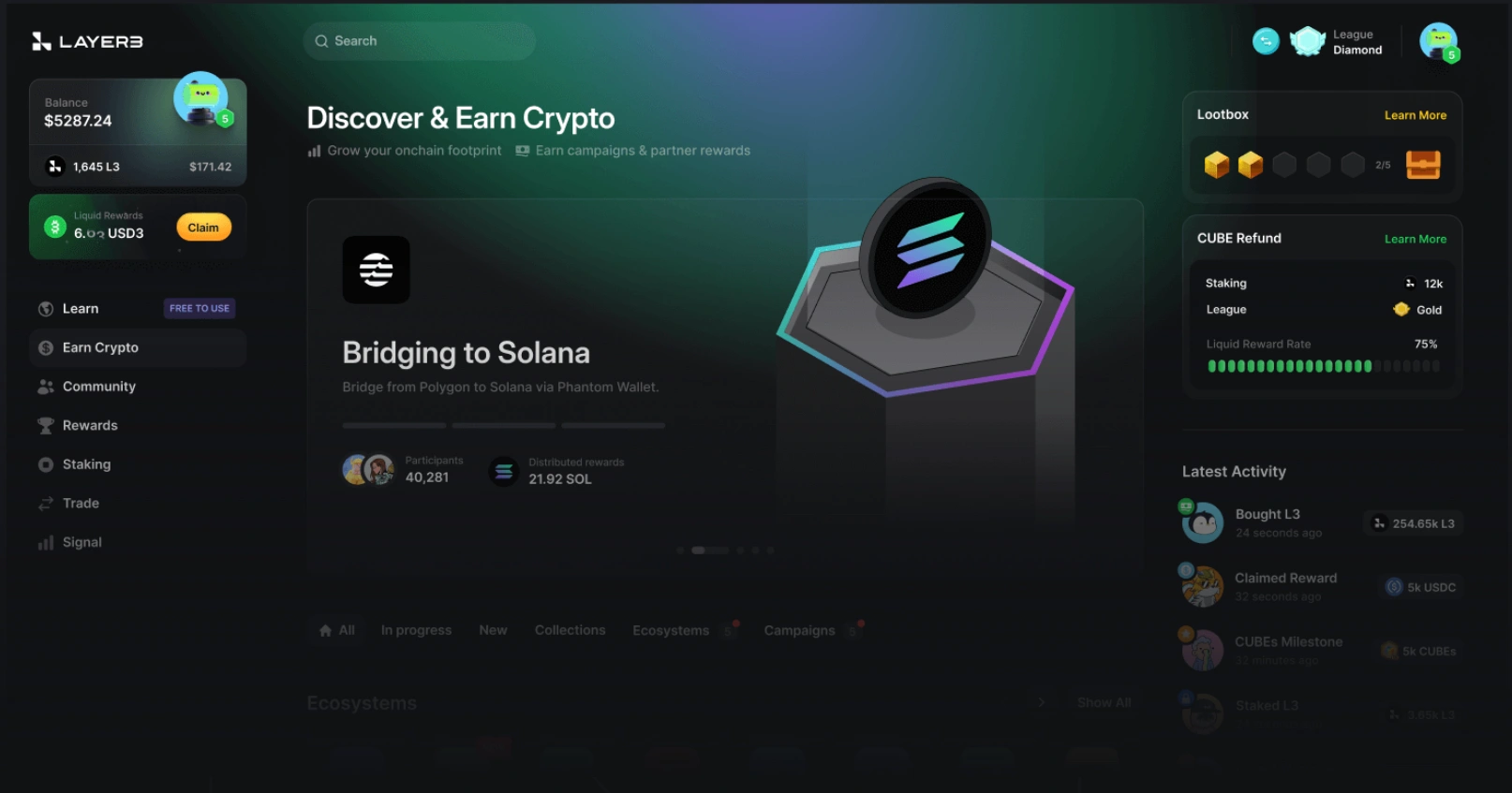
- Complete quest-based crypto tasks: many testnets use platforms like Galxe, Zealy, or Layer3 to gamify participation
- Create educational content: some testnets offer bounties for tutorials, walkthroughs, or community posts
What you earn
- Incentivized testnets: clearly defined rewards – points, NFTs, or tokens upon mainnet launch
- Retroactive crypto airdrop potential: varies enormously – documented examples range from $100 to $5,000+ per participant
- The Aptos incentivized testnet rewarded selected users with 150–300 APT tokens; at peak prices, this exceeded $5,000 for some participants
- Not all testnets distribute rewards – some use test participants purely for development with no token reward
Who it is for
Testnets are best suited to users who are comfortable using crypto wallets, interacting with blockchain interfaces, and following technical documentation. Complete beginners can start with quest-based testnet crypto tasks on platforms like Galxe or Layer3, which require little more than a MetaMask wallet. Running nodes or deploying contracts requires developer-level knowledge.
Key risks
- Reward uncertainty – participation does not guarantee any reward if the project does not launch or decides not to reward testers
- Sybil filtering – projects increasingly use anti-bot checks; running multiple wallets or automating activity leads to disqualification
- Time investment – quality participation takes real effort; low-quality or rushed activity may not qualify for rewards
- Project failure – many testnet-stage projects never reach mainnet
→ Full guide: Crypto Testnets
Comparing All Four Methods
Use this table to quickly identify which task type fits your current situation:
| Method | Capital Needed | Skill Required | Earning Potential | Reward Timing | Best For |
|---|---|---|---|---|---|
| Faucets | None | None | Very Low (< $20/mo) | Instant / daily | Complete beginners |
| Surveys & Microtasks | None | None | Low–Med ($20–$300/mo) | Days to weeks | Anyone; no-skill entry point |
| Bounties | None | Low to High | Low–Very High (varies) | Days to months | Developers, security researchers |
| Testnets | None | Low to High | Unpredictable / high upside | Months (retroactive) | Tech-comfortable users |
How to Choose the Right Method
The four categories are not mutually exclusive – most active crypto task earners use at least two or three simultaneously. But if you are just starting out, here is how to match your situation to the right starting point:
If you want zero risk and the simplest possible start
Begin with crypto faucets. They require nothing – no wallet setup knowledge, no skills, no risk. The earnings are minimal, but you will receive your first crypto and learn the basics of wallet addresses and transactions without committing to anything.
If you want consistent but modest earnings without technical skills
Crypto surveys and microtasks are the right starting point. They pay more than faucets, require no capital, and are available on multiple platforms. Expect to invest 1–2 hours per day and earn $50–$200 per month across several platforms.
If you have a specific skill: writing, coding, translating, design
Explore crypto bounties that match your skill set. Content and translation bounties are accessible to non-developers and pay significantly more per task than surveys. If you are a developer or security researcher, bug bounties offer the highest earning potential in this entire category.
If you are comfortable with crypto wallets and want higher upside
Participate in testnets. The time investment is real and the reward is not guaranteed, but the upside potential – qualifying for a significant mainnet airdrop – is unique to this method. Combine testnet participation with regular surveys and microtasks to maintain consistent income alongside the speculative opportunity.
Risks That Apply Across All Four Categories
Scams and fake platforms
All four categories attract fraudulent platforms that mimic legitimate sites. The most common pattern: a platform lets you accumulate earnings but never actually pays out. Before investing time in any platform, search for recent user reviews, payment proof from other users, and transparent withdrawal conditions.
Opportunity cost
Time spent on low-paying crypto tasks is time not spent developing higher-value skills. Faucets and basic surveys are a fine starting point, but if you find you have more technical ability, redirecting time toward bounties or testnet participation will yield significantly better returns.
Market volatility of rewards
Rewards paid in non-stablecoin crypto can lose value rapidly. A $50 reward in a new project token may be worth $5 a week later. Consider converting task earnings to stablecoins (USDC, USDT) if preserving value is a priority.
Tax obligations
In most jurisdictions, cryptocurrency received as payment for crypto tasks is treated as taxable income at the time of receipt. Keep records of what you earn, when you receive it, and its value at that time. Consult a tax professional if your amounts are significant.
FAQ About Crypto Tasks
Crypto tasks are small, defined actions that blockchain projects pay users to complete in exchange for cryptocurrency rewards. They include claiming from faucets, completing surveys and microtasks, contributing to bounty programs, and participating in testnet blockchain activities. The common thread is that all crypto tasks reward effort and time rather than invested capital.
The easiest starting point is crypto faucets as they require nothing more than a wallet address and take seconds to use. Once you understand how wallet addresses and small transactions work, move to surveys and microtasks on platforms like Freecash or Idle-Empire. No technical knowledge, no investment, and no prior crypto experience is needed for either of these crypto task types.
No. All four types of crypto tasks covered in this guide: faucets, surveys and microtasks, bounties, and testnets – can be started without spending any money. You do not need to buy cryptocurrency first. You earn it directly by completing the tasks. The only exception is paying small network (gas) fees when withdrawing, which come out of your earnings.
Bug bounties have by far the highest earning ceiling – critical vulnerabilities in major DeFi protocols have been rewarded with hundreds of thousands of dollars. However, they require significant technical skill. For non-developers, the most practical high-earning option is stacking multiple survey and microtask platforms simultaneously, which consistent users can push to $200–$300 per month. Testnet participation has unpredictable but potentially high retroactive rewards.
Some are, some are not. The most reliable way to verify a platform before investing time is to search for recent user reviews and verifiable payout proof – not screenshots, but transaction records or forum posts from other users. Established platforms like Freecash, Cointiply, Immunefi, and Gitcoin have long track records. For any new platform, always check withdrawal conditions before committing effort.
For most survey and microtask platforms, no as they hold your earnings in an internal account balance and you only need a wallet address when you are ready to withdraw. For bounties and testnets, a wallet (such as MetaMask) is usually required to interact with blockchain protocols and receive rewards. Setting up a wallet is free and takes a few minutes.
It depends on the task type. Faucets take 1–2 minutes every hour. Surveys and microtasks typically require 30–90 minutes per day to generate meaningful earnings. Bounties are project-based and can range from a few hours for a content piece to weeks for a serious bug hunt. Testnet participation varies – some quest-based tasks take 15 minutes; running a node is an ongoing commitment.
All Articles About Crypto Tasks and Blockchain Activities
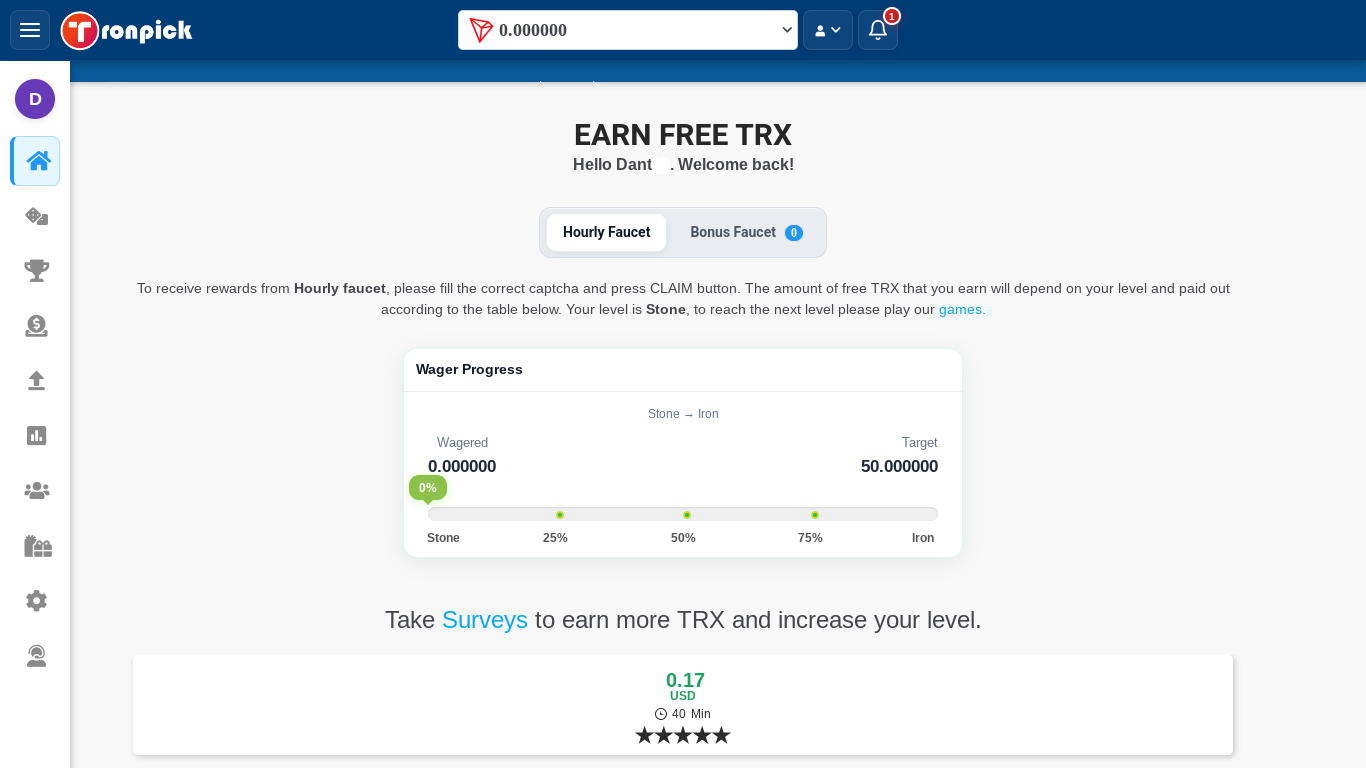
Tronpick Faucet Review 2026: Earn Free TRX Hourly

Step App Review: Can You Really Earn Crypto Just by Walking in 2026?